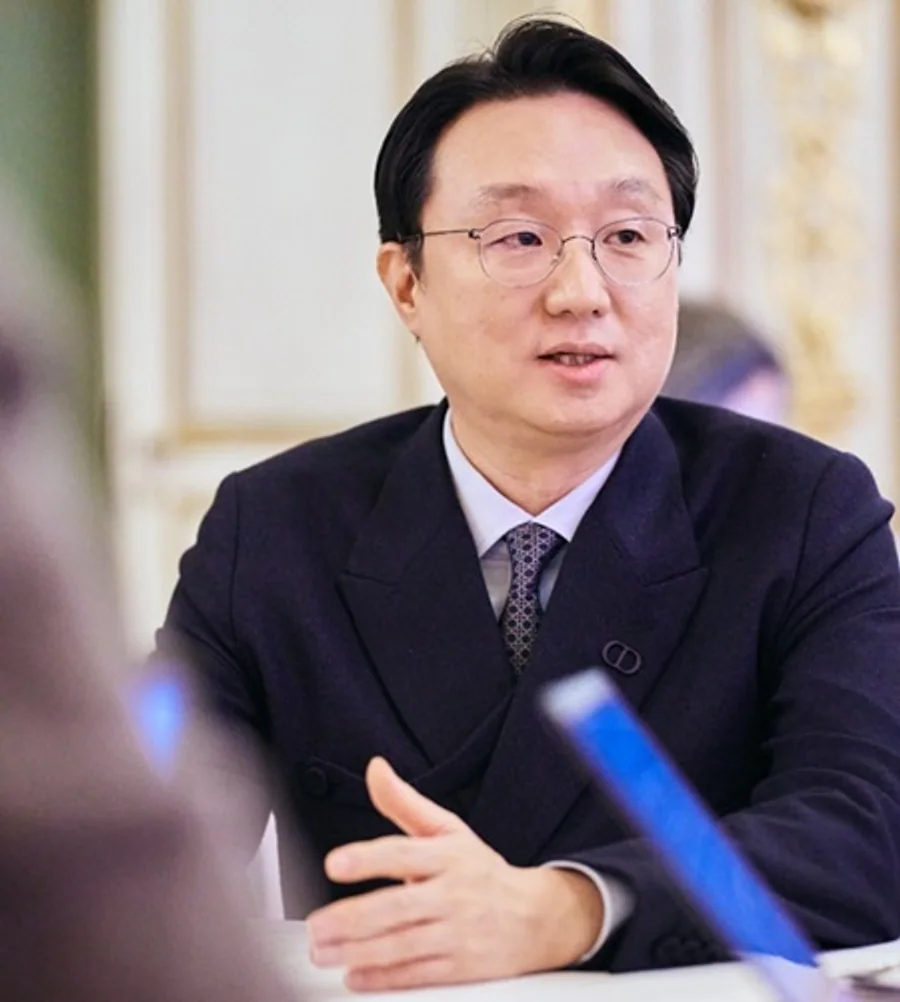
At the IMCAS World Congress 2025(IMCAS 2025), which kicked off on January 30 in Paris, the prominence of Asia‘s aesthetic medicine industry was also highlighted. Dr. Jaeyoung Park, Director of Apgujeong Oracle Dermatology Clinic, was the Asian representative in the expert panel discussion of Merz Aesthetics' pre-event global study. He showcased South Korea's leading position in aesthetic medicine on the international stage through his insights.
Dr. Jeyoung Park has long served as Merz‘s global speaker, consultant, and trainer, with extensive lecturing experience in ultrasound lifting and botulinum toxin treatments. Merz's U.S. headquarters also recognized him as South Korea's first Key Doctor for performing over 1000 Ultherapy procedures. More recently, he received the Best International Collaboration Paper Award from the journal Plastic and Reconstructive Surgery(PRS) for his research on botulinum toxin resistance. We had the opportunity to speak with him on-site to learn more about his insights.
- Can you introduce this study and share your thoughts on participating as the Asian representative?
First, I am honored to have been invited as a panelist representing Asia at this event. This study highlights the significant role that aesthetic procedures play in enhancing external beauty, boosting confidence, and leading our lives in a more positive direction. By shedding light on aesthetic treatments‘ psychological benefits and motivation, I believe this research dramatically contributes to understanding consumers' interests and deeper emotions.
- What do you consider the most noteworthy findings from the study?
One of the most striking findings was that approximately 69% of respondents worldwide stated that aesthetic procedures help shape their self-image from within. Additionally, many acknowledged that aesthetic treatments significantly bridge the gap between their internal self-perception and external appearance. Another key takeaway was related to perceptions of aging. About 67% of respondents viewed aging as a natural part of life, and 51% believed that their sense of autonomy and ability to make independent decisions increase as they age. The fact that so many people embrace aging in a positive light was shocking.
The study also revealed that 73% of respondents felt that aesthetic procedures enhanced their sense of autonomy(felt empowered). In comparison, 72% stated that treatments made them feel more alive, and 69% reported feeling freer to explore new experiences. Another noteworthy finding was that 74% of respondents believed self-confidence is closely linked to social well-being, highlighting the deep connection between personal confidence and overall social happiness.
- Perspectives on aesthetic procedures varied by country. How does South Korea compare?
According to the study, when asked, ‘I feel confident when I look at myself in the mirror’, 54% of respondents globally agreed. On a country-specific level, 64% of Chinese and 50% of Thai respondents expressed confidence in their appearance, whereas only 28% of South Korean respondents felt the same.
Similarly, when asked, ‘I feel comfortable discussing aesthetic procedures with others’, 56% of global respondents and approximately two-thirds of respondents across Asia agreed. However, only 43% in South Korea responded positively, indicating a comparatively lower openness regarding aesthetic treatments.
This indicates that South Korean consumers exhibit significantly lower self-confidence than the global average and other Asian countries. It also suggests a more reserved attitude toward discussing aesthetic procedures with others, reflecting a relatively closed mindset.
- Nevertheless, experts highly regarded South Korea's status in the field of medical aesthetics.
I agree. South Korea currently holds a crucial position as a global leader in the medical aesthetics market. The country’s aesthetic medical industry is one of the most competitive in the world, with medical professionals demonstrating exceptional dedication and effort to enhance their expertise. Additionally, South Korea's continuous technological innovation, driven by locally developed aesthetic devices and formulations, is essential to its success.
However, the study results made me realize that medical professionals still lack effort in carefully understanding the deeper psychological aspects of consumers. More extraordinary efforts are needed in this area moving forward.
- How do you plan to share your experience at this event with Korean medical professionals?
This study has demonstrated that aesthetic procedures are not solely about enhancing external beauty but also significantly helping individuals build inner confidence. Additionally, it has been confirmed that these treatments can positively contribute to social well-being and foster strong interpersonal relationships.
I plan to actively share aesthetic procedures’ psychological and social benefits with Korean medical professionals, emphasizing the need for more significant effort and research in supporting consumers’ emotional well-being and social happiness. Korean doctors must move beyond mechanical, factory-like consultations and adopt a more holistic approach that considers a patient’s physical appearance and carefully considersconsiders their psychological and social circumstances.
![[Card News] Better Together Seoul Culture & Wellness Festival...See you on October 9 at DDP Oullim Square!](/news-images/85341c44f72401a7415c4da5ca3242f3434fe2a10935287f5b87d7acbd88ad87-480-v1.webp)