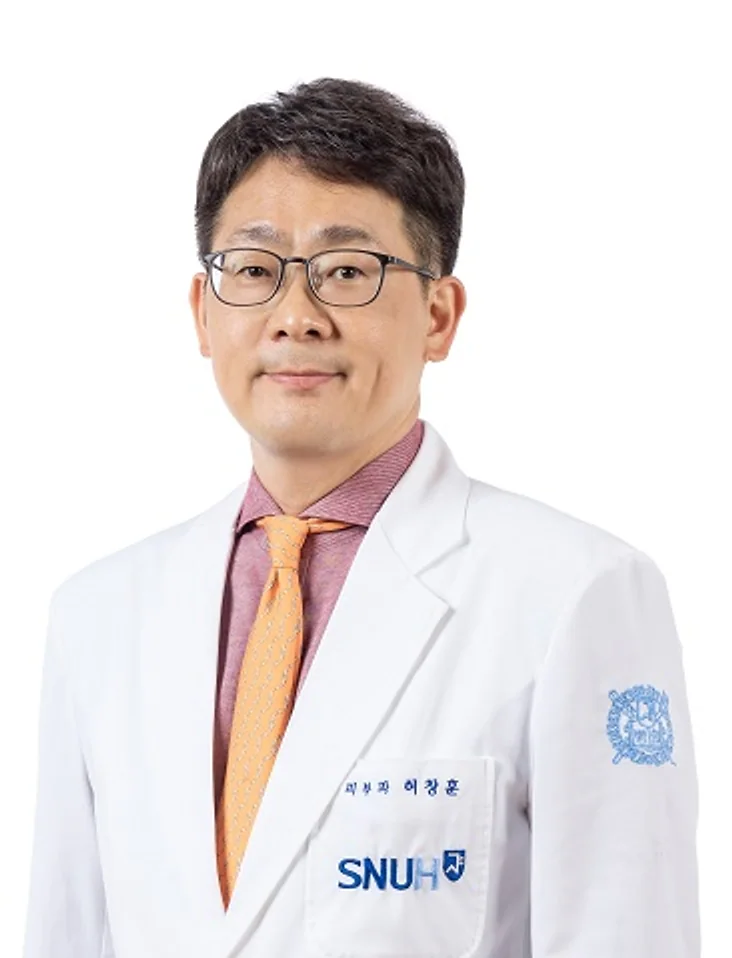
Since I started as a dermatologist, the psychiatric department (now the psychiatric department) was located on the same floor. Then, the psychiatric department is more familiar and attached than other departments. Today, I present the transcranial magnetic stimulator, one of the devices used for treatment in the Department of Mental Health.
Although the brain, which is a 1.4 kg mass of nerve cells, is only 2% of its body weight, it receives more than 20% oxygen and glucose supply. Most of all, It enjoys the benefit of being a priority supply in times of crisis. The brain is considered the most crucial of all human organs because it plays the most critical role in maintaining life and preserving ‘humanity’ distinguished from animals.
Although much effort is being put into brain research worldwide, we still don't know much about the brain. In the U.S., the brain science project ‘Brain Initiative’ has been conducted for over ten years with nearly 6 trillion won. Because if the secret of the brain is solved, not only can it conquer incurable diseases such as dementia, but it can also bring about the rapid development of high-tech industries such as artificial intelligence and computers.
The idea that the brain is treated with electricity directly reminds people of the electric chair that executes the death penalty and the torture devices in horror movies; anyone can feel the objection. It is still true even for me, who understands brain disease diagnosis by measuring brain waves and brain activity through electrical signals.
However, one of the non-pharmacological treatments in the modern medical field involving electricity to the brain has been actively used for a long time. Electroconvulsive Therapy (ECT), formerly known as electro-shock therapy, was first attempted in 1938 as the oldest method. It is a method of artificially convulsing by passing a strong current for a short time after general anesthesia. Since it requires general anesthesia and hospitalization and visual discomfort for convulsions, non-invasive brain stimulation techniques such as transcranial magnetic stimulation (TMS) and transcranial cranial direct current stimulation (tDCS) have been devised.
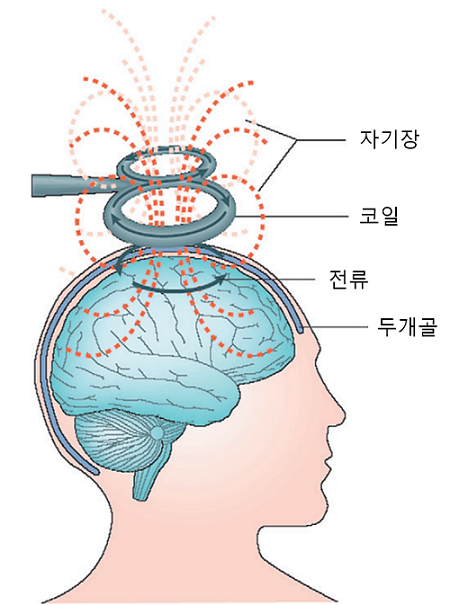
Among them, transcranial magnetic stimulation, which has long been recognized for its safety and effectiveness, was first tried in 1985 by Baker et al. in the U.K. The magnetic field, formed outside the scalp through the coil passes through the skull (transcranial cranium), is transmitted to the brain tissue. And it transforms into an electric field as in the principle of a generator, giving stimulation to the brain.
The device for magnetic stimulation is a Class 2 medical device whose official name is a medical electromagnetic generator. Magnetic stimulation using this device does not drain the strength of objects with high resistance, such as the skull or scalp. And direct currents do not flow through the scalp, so there is less irritation or pain. However, the disadvantage is that the equipment is relatively large, making it difficult to move and generating noise.
The US FDA approved transcranial magnetic stimulation for treating depression that does not respond to antidepressant therapy in 2008. It was also officially approved as a remedy for depression in Korea in 2013. However, some still claim that the treatment mechanism is not precise and the clinical effect is insignificant. There is a need for continuous additional research on treatment parameters such as the appropriate number of treatments, intensity, frequency, location, and duration.
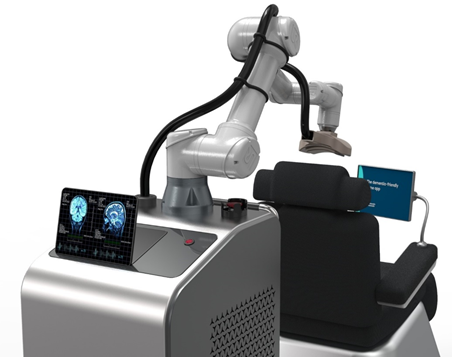
Recently, clinical trials are being conducted for various diseases such as dementia, stroke, Parkinson's disease, and schizophrenia to broaden the applications. Furthermore, by combining the robot and navigation control technology, a device has been developed that intensively treats only that area by designating the desired treatment area and following the patient's head movement. More active research activities are expected as technologies fit the latest trends, such as electronic medicine and digital treatment technology.
![[Card News] Better Together Seoul Culture & Wellness Festival...See you on October 9 at DDP Oullim Square!](/news-images/85341c44f72401a7415c4da5ca3242f3434fe2a10935287f5b87d7acbd88ad87-480-v1.webp)