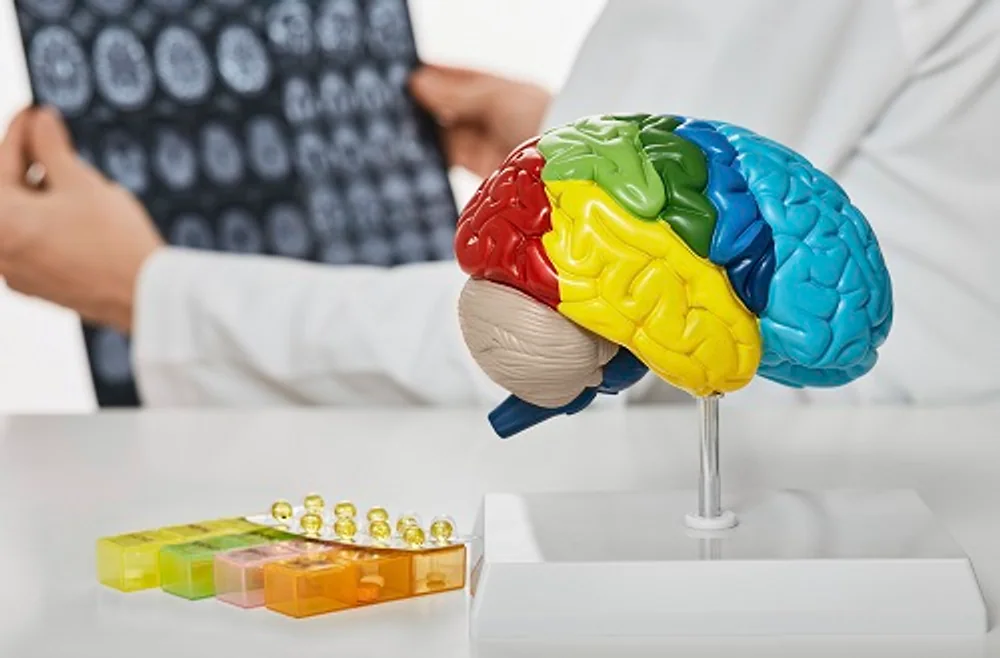
"The phrase 'warm spring breeze and the fragrance of flowers' is particularly fitting for these spring days. All the senses we use are perceived through the brain. The brain is a genuinely mysterious organ, responsible for seeing, hearing, feeling, remembering, and making judgments, among other things."
Therefore, any abnormalities in the brain can significantly impact our ability to carry out everyday tasks. We might experience sudden sadness and struggle to see a way forward. Furthermore, precious memories with loved ones might slowly fade away.
Therefore, many doctors and scientists have attempted various methods to understand the structure of the brain and solve its disorders. Representative examples include antidepressants and dementia medication. However, a significant obstacle in the brain is known as the "blood-brain barrier" (BBB). The BBB is a unique blood vessel that protects the brain and prevents the penetration of foreign substances, such as drugs, toxins, and viruses, into brain tissue. The BBB exists not only in specific areas but also throughout the brain's blood vessels, which reduces the effectiveness of central nervous system drugs used for brain tumors, neurodegenerative diseases, and other disorders.
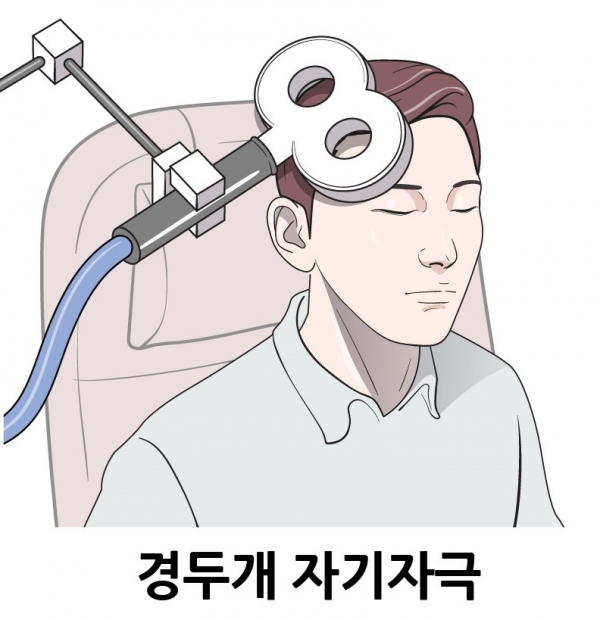
With the development of medical technology, new treatment methods are being developed rapidly. A representative example is 'Transcranial Magnetic Stimulation (TMS) .'TMS is a brain stimulation method that activates or inhibits specific brain nerve cells by passing a magnetic field generated from an electromagnetic coil shaped like the number 8 through the skull. TMS is mainly used for depression, refractory obsessive-compulsive disorder, and chronic pain. However, recently it has been expanding its range to Alzheimer's disease, considered a major cause of dementia.
■ Non-invasive therapies for treatment-resistant depression
Depression is the group of disorders to that transcranial magnetic stimulation is most actively applied. Along with psychotherapy, antidepressant medication is typically used as a primary treatment for depression. However, since most people with depression lead relatively active social lives, treatment focuses on medications that do not interfere with this.
The problem is with "treatment-resistant depression," which does not respond to drug treatment. Treatment-resistant depression refers to cases where two or more drugs have been taken for a sufficient period but have not been effective or have caused side effects. It is not an official diagnosis, but about 30% of patients with depression are diagnosed with treatment-resistant depression.
Regarding alternative treatments for treatment-resistant depression, there are two options: electroconvulsive therapy (ECT) and transcranial magnetic stimulation (TMS). ECT uses "electricity," while TMS uses "magnetic fields," which is the most significant difference.
Electroconvulsive therapy (ECT) uses electricity to induce seizures to treat depression artificially, but it requires a general anesthetic and can affect the whole body. On the other hand, transcranial magnetic stimulation (TMS) uses magnetic fields, so no anesthesia is needed. TMS has developed significantly since its first use in 1985 by Baker in the UK and received FDA approval for safety and effectiveness in 2012.
In the treatment of depression, transcranial magnetic stimulation (TMS) stimulates the prefrontal cortex to increase serotonin and dopamine secretion, improving symptoms. The procedure does not require surgery or anesthesia, and patients can resume their daily activities immediately following treatment. Moreover, TMS is considered safe for human use and can be applied to adolescents with depression, postpartum women with depression, and others.
According to Professor Seok Jung-ho of the Department of Psychiatry at Gangnam Severance Hospital, "The greatest advantage of using transcranial magnetic stimulation (TMS) is that there are no side effects as it uses magnetic fields." He explained that the key is to deliver the magnetic fields to the right area accurately; fortunately, with recent technological advances, the accuracy has dramatically improved.
■ Exceptional effects demonstrated even in rare intractable tinnitus
Transcranial Magnetic Stimulation (TMS) shows excellent results even for intractable tinnitus. Tinnitus is a common symptom experienced by 21% of adults, which is the perception of sound stimulation only in one's ear without any external sound stimulation. However, the exact cause of tinnitus has not been fully understood yet, and various treatment methods are being researched.
However, a recent study by a research team led by Professor Moon In-Seok from the Department of Otorhinolaryngology at Gangnam Severance Hospital and Professor Bae Sung-Hoon from Severance Hospital has revealed new findings on the treatment of intractable tinnitus.
A study was conducted on 69 patients with chronic tinnitus who had not responded to medication therapy for over six months. The patients were divided into two groups, one receiving transcranial magnetic stimulation (TMS) and the other receiving transcranial direct current stimulation (tDCS), and the treatment outcomes were analyzed.
According to the research results, among the patients who received transcranial magnetic stimulation therapy, 17 out of 36 patients (47%) showed improvement in tinnitus symptoms by more than 20% compared to before the treatment. In comparison, 12 out of 33 patients (36%) who received transcranial direct current stimulation therapy showed improvement. Interestingly, the tinnitus symptoms improved even more after one month of treatment. In addition, the study found that the treatment effects could last for several months after only five days of treatment.
That being said, although transcranial magnetic stimulation (TMS) is a commonly used treatment in neurology and psychiatry, there have been few cases or studies on its use for treating tinnitus. Problems in the ear initially cause tinnitus, but when it becomes chronic, it can lead to abnormal activity in the auditory cortex and other regions of the brain. Therefore, it is essential to seek out effective treatments for tinnitus actively.
Professor Moon In-Seok explained that tinnitus often arises from functional changes in the brain rather than problems with the ears themselves. Patients who have not responded to drug therapy have suffered for a long time. He further stated that transcranial magnetic stimulation could provide new hope for patients with chronic tinnitus, as it can produce long-lasting effects even with short treatment periods.
■ Mild Alzheimer's patients can maintain their cognitive abilities and daily activities.
As the body ages, so does the brain. Therefore, it is natural for cognitive functions such as reasoning, spatial perception, and language abilities to decline gradually in older adults. However, if the decline in cognitive function is severe enough to make daily life or social life difficult, Alzheimer's disease should be suspected.
The problem is that a cure for Alzheimer's disease that completely stops or prevents symptoms from appearing has not yet been developed. As the number of Alzheimer's patients is rapidly increasing worldwide, there is an urgent need for innovative treatment options.
One of the alternative options at this point is to combine drug therapy with transcranial magnetic stimulation (TMS) to maintain cognitive function as much as possible, even in mild cases of Alzheimer's disease.
The use of transcranial magnetic stimulation (TMS) for Alzheimer's disease treatment has been actively studied abroad, and there are also active studies underway in Korea. In Korea, Chungnam National University Hospital Neurology conducted a clinical research trial in 2013 and verified clinical trials with the Korea Food and Drug Administration from 2015 to 2017, proving its therapeutic effects. In addition, Chungnam National University Hospital announced that after following up with patients who received "TMS + cognitive training therapy" and those who received medication for three years, the "mild dementia status" of the TMS clinical trial patients did not deteriorate and was maintained.
The presentation materials indicate that the long-term therapeutic effect of transcranial magnetic stimulation has been proven. Although the last hurdle remains as this year's confirmation clinical trial is scheduled based on the results of past clinical trials, if the objectivity and therapeutic effects are proven, the quality of life for Alzheimer's patients is expected to improve significantly.
Professor Park Gun-woo of the Department of Neurology at Korea University Anam Hospital said, "Transcranial magnetic stimulation has the potential to be useful in the diagnosis and treatment of Alzheimer's disease." He added, "If the ongoing confirmatory clinical trial of transcranial magnetic stimulation for Alzheimer's disease demonstrates its efficacy, it could become a new treatment option."
![[Card News] Better Together Seoul Culture & Wellness Festival...See you on October 9 at DDP Oullim Square!](/news-images/85341c44f72401a7415c4da5ca3242f3434fe2a10935287f5b87d7acbd88ad87-480-v1.webp)