"Forty percent of cancer patients undergoing chemotherapy experience oral complications, with the most common being' oral mucositis.' Chemotherapy can damage the epithelial cells of the oral mucosa, leading to ulcers and inflammation in the mouth or throat.
The issue is that dental treatment is generally not actively pursued during chemotherapy. Therefore, urgent treatments such as root canals or implants should be completed before starting chemotherapy.
The issue is that dental treatment is generally not actively pursued during chemotherapy. Therefore, urgent treatments such as root canals or implants should be completed before starting chemotherapy.
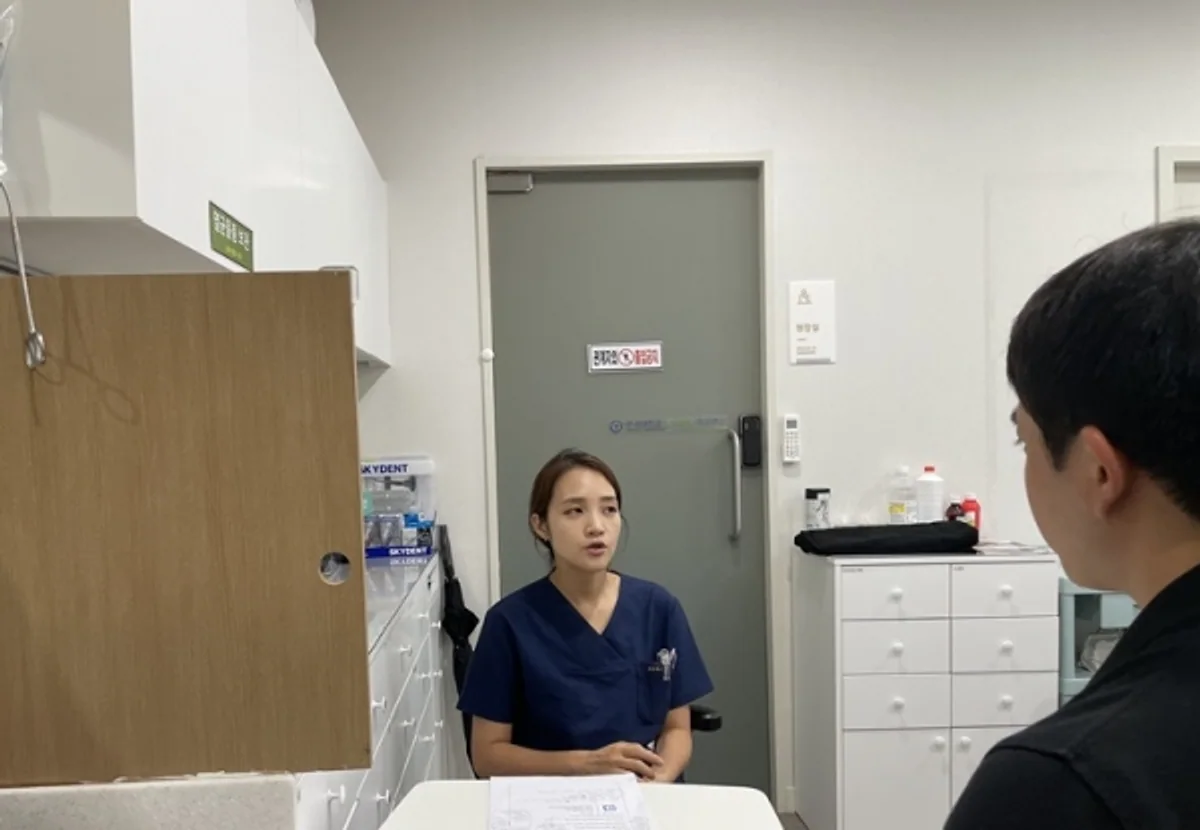
Once teeth are damaged, recovery is difficult. However, many people prioritize cancer treatment and postpone dental care. In light of this, we spoke with Lee Ji-sun, the Dental Director at Danaum Nursing Hospital, to learn about oral care methods during chemotherapy.
-Could you please introduce Danaum Nursing Hospital?
Danaum Nursing Hospital is a cancer-specialized nursing hospital. Our resident surgical specialist provides comprehensive care for cancer patients, including integrated cancer immunotherapy, functional medicine clinics, and specialized dental care by a periodontist. While in the past, the majority of our visitors were middle-aged and elderly patients in their 50s and 60s, we are now seeing an increase in younger patients in their 30s and 40s.
-It’s not common to hear of a dental clinic within a nursing hospital.
Dental clinics are rarely found in most nursing hospitals. However, dental care is critical during cancer treatment. Due to the decreased immunity during chemotherapy, there is a risk of infection, which theoretically prohibits dental treatment. Nonetheless, dental care should be combined with cancer treatment to maintain quality of life and oral health after chemotherapy.
Danaum Nursing Hospital has introduced a hyperbaric oxygen therapy device to support patient recovery. Hyperbaric oxygen therapy can aid natural healing for those with gum disease, oral surgery, or dental health issues. While most medical institutions have hyperbaric oxygen therapy devices operating at 1 to 1.5 atmospheres, Danaum Nursing Hospital's device can reach up to 3 atmospheres. It is generally known that effectiveness begins at 2 atmospheres or higher, making this an excellent piece of medical equipment. Another advantage is the hospital's proximity to Seoul Asan Medical Center and Samsung Medical Center, allowing quick emergency transfers.
-Why is dental treatment not conducted during chemotherapy?
Cancer treatment is generally divided into surgery, radiation therapy, and chemotherapy. When radiation therapy and chemotherapy with anticancer drugs begin, various short—and long-term complications can occur in the mouth. These may include inflammation of the oral mucosa, dry mouth, taste disturbances, and difficulties with swallowing.
Therefore, it is essential to undergo a dental check-up before starting chemotherapy. This is to prevent the need for extractions or dental surgeries when the body is weakened and recovery is slow due to cancer treatment. Since chemotherapy suppresses the immune system, increasing the risk of infection, treating and removing any potential dental issues in advance is important.
-What is the actual oral health status of cancer patients?
It varies from patient to patient. Those who did not receive any dental treatment before starting chemotherapy often face severe issues. Many patients are unable to brush their teeth due to fatigue and pain during chemotherapy. Most chemotherapy drugs affect the mucous cells of the mouth and throat. When symptoms are severe, brushing becomes difficult, and mouthwash is sometimes prescribed.
The challenge arises when treatment is necessary. Dental treatment during chemotherapy requires extreme caution. Some patients regret not addressing dental issues sooner. In cases of severe periodontal disease, chemotherapy can weaken the immune system, leading to a recurrence of periodontitis. In such cases, treatment may require the use of antibiotics. If severe periodontal disease necessitates tooth extraction, it is almost impossible to perform the extraction during chemotherapy. Instead, efforts are made to minimize discomfort by removing as much inflammation as possible and providing regular dressings and antibiotic ointments. Additionally, depending on the type of chemotherapy, extraction after the completion of chemotherapy can lead to osteomyelitis, so extractions must be approached with great caution.
-What equipment do you use for dental treatment?
Many patients are frustrated because they don't fully understand the condition of their teeth. We introduced IO Bio's 'Qraypen C to provide patients with more intuitive images.' The Qraypen C is a Class II medical device capable of diagnosing dental caries. Its advantage is that it can detect cavities early, thus increasing the tooth preservation rate. The Qraypen C uses a biofluorescence imaging system that emits blue visible light to detect bacteria in the teeth and oral cavity. Additionally, areas with cracks or cavities emit a red fluorescence, giving patients an objective indicator of their oral health.
-What would you say about the importance of oral care to cancer patients?
Once chemotherapy begins, dental treatment becomes difficult. While it's not entirely impossible, it is generally avoided due to the risk of infection. Therefore, proper brushing is essential. The issue is that many cancer patients opt for 'soft bristle' toothbrushes due to gum pain. While soft bristles can be helpful for those with severe oral complications or sensitive gums, they may not be effective enough in removing plaque. I recommend using a regular bristle toothbrush rather than a soft one to remove plaque effectively. Additionally, since tartar cannot be removed through brushing alone, it is advisable to visit the dentist regularly for scaling. The mouth tends to dry out during chemotherapy, so it's also important to frequently rinse with water to prevent dryness. Applying fluoride at the dentist can also be beneficial.
Cancer is a chronic disease that requires continuous management to prevent recurrence and metastasis. Danaum Nursing Hospital is not just a place to rest during chemotherapy and radiation therapy; it provides comprehensive care from cancer diagnosis, surgery, chemotherapy, and radiation therapy to the necessary post-treatment care. In fact, even after completing chemotherapy, many patients continue to visit regularly for cancer immunotherapy and dental check-ups
![[Card News] Better Together Seoul Culture & Wellness Festival...See you on October 9 at DDP Oullim Square!](/news-images/85341c44f72401a7415c4da5ca3242f3434fe2a10935287f5b87d7acbd88ad87-480-v1.webp)