Dental hygienists from 34 countries around the world gathered in the heart of Seoul. They came to attend the 2024 International Symposium on Dental Hygiene (ISDH 2024), held from July 11 to 13. ISDH 2024 is a major international dental hygiene event organized by the International Federation of Dental Hygienists (IFDH) and hosted by the Korean Dental Hygienists Association. Initially, it was scheduled to be held in Korea in 2019, but it was postponed due to unstable international conditions. However, after thorough preparation, this event has been praised as 'unprecedented.'
In fact, more than 1,000 people pre-registered for the event, with dental hygienists from Korea, Europe, the Americas, the Middle East, Japan, and other countries attending in person.
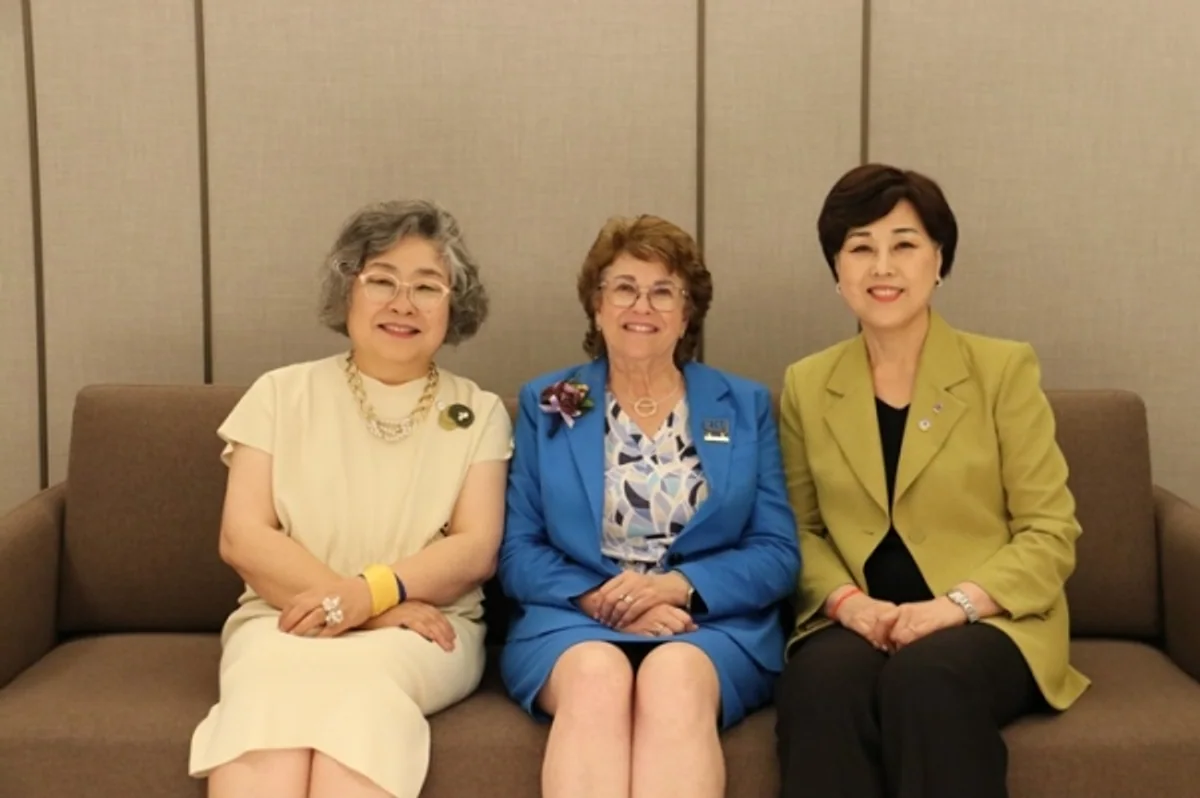
Notably, Wanda Fedora, President of the International Federation of Dental Hygienists (IFDH), and Jill Rethman, the incoming president, attended the event, further enhancing its significance. They were joined by Hwang Yoon-sook, President of the Korean Dental Hygienists Association, and Park Jung-ran, Vice President. We had the opportunity to meet them on-site and discuss the role of dental hygienists.
- What role do dental hygienists play in dental care?
Hwang Yoon-sook, President (hereafter Hwang): Dental hygienists are individuals who have graduated from a dental hygiene program at a health college, taking the national dental hygienist exam, and, upon passing, have been issued a medical technician license by the Minister of Health and Welfare. As oral health professionals, dental hygienists work alongside dentists as specialists in preventing and educating oral diseases. They play a crucial role in dental care by performing tasks such as removing calculus and other deposits, applying fluoride and temporary fillings, taking dental impressions, and contributing to the prevention and management of dental and oral diseases. Additionally, they assist with dental treatment and support practice management.
Pilot projects for specialized dental hygienists and early childhood oral health education have recently expanded. The pilot project is being promoted this year, focusing on rural areas with a high elderly population. At the same time, the 'Visiting Early Childhood Oral Health Classroom,' in collaboration with the Seoul Metropolitan Office of Education, is being expanded on a large scale to include kindergartens and elementary schools.
Park Jung-ran, Vice President (hereafter Park): Dental hygienist education in Korea began in 1965 at Yonsei University's Department of Medical Technology. Now, 88 universities nationwide graduate over 5,000 bachelor's and health science degree holders annually. In both Korea and Japan, dental hygienists assist with dental treatment. However, as the healthcare paradigm shifts from treatment-focused to prevention-focused care, dental hygienists are increasingly taking on preventive education roles, similar to what is seen in Western countries.
Wanda Fedora, President of IFDH (hereafter Wanda Fedora): Dental hygienists were first introduced in the United States. Due to the nature of dental care, most of the work is carried out through collaboration between dentists and dental hygienists. In practice, dental hygienists discuss treatment plans with dentists and are responsible for scaling, taking dental impressions, initial examinations, oral health education, and administering anesthesia. They are also in charge of taking and developing X-rays.
- ISDH 2024 was held in Korea.
Hwang: ISDH was held in Korea for the first time in 23 years. It was hosted to showcase the role of dental hygienists in Asia and their contribution to public oral health. We made several efforts to bring this event to Korea. In 2013, we secured the rights to host ISDH 2019, but concerns arose about holding it in Seoul due to increased international attention on North Korea's provocations. As a result, the 2019 event was transferred to Brisbane, Australia. After many twists and turns, it has finally returned to Korea. Given the long preparation period, we were fully ready, and the event became an opportunity to showcase the prestige of Korean dental hygienists.
Wanda Fedora: It has been 45 years since the IFDH was established, and over 30 countries are now federation members. The role of dental hygienists varies by country, but in some foreign countries, dental hygienists can independently see patients without a dentist. I have been active in the IFDH for over ten years. Many changes have occurred during that time, including advancements in medical technology and the expanding role of dental hygienists. As my two-year term comes to an end with this event, ISDH will leave me with fond memories.
Park: We prepared with a great sense of responsibility to showcase the strength of Korea's dental hygiene field to the world. It was an academic festival featuring high-level lectures from world-renowned scholars, exhibitions, and special programs. It was also a joyful and fulfilling gathering where dental hygienists from around the world could experience Korea's uniqueness and recognize its excellence together.
- The healthcare paradigm has shifted from treatment-focused to prevention-focused care. This is also true in dentistry, but in our country, there is a particular emphasis on 'scaling.
Hwang: "Scaling is indeed very important. The media's emphasis on Scaling is likely because it relates to health insurance. However, home care is the most crucial aspect. Proper brushing alone can effectively prevent dental and periodontal diseases such as cavities. It's essential to use dental floss properly between the teeth. In response, the Korean Dental Hygienists Association is working to instill good brushing habits from a young age."
Park: "The current challenge our society faces is 'aging.' People become more prone to gum diseases and tooth damage as they age. Saliva production decreases, and chewing ability diminishes. To address this, the Korean Dental Hygienists Association is actively promoting the training of specialized dental hygienists through pilot projects, focusing on the elderly in rural areas with large aging populations to cultivate oral care specialists for senior citizens."
Wanda Fedora: "There is nothing more important than prevention. Just as the saying goes, 'Old habits die hard,' the IFDH is also actively promoting the importance of brushing. Additionally, unlike in the past, oral care products are now being developed to cater to medical consumers' needs. Toothpaste is a prime example. Many products have been introduced, such as fluoride toothpaste, toothpaste for sensitive teeth, tartar prevention toothpaste, and gum disease prevention toothpaste. However, for good oral health, it's important to ensure that government regulations make these products before choosing them."
- Were there any standout technologies at ISDH 2024?
Wanda Fedora: "Oral hygiene products and oral microbiome diagnostic devices, X-rays, and oral radiology simulators were among the many medical technologies showcased. Through this event, I noticed that the role of Korean dental hygienists has changed significantly compared to the past.
Hwang: "When attending symposiums in various countries, you can see the focus of each country's dental hygienists. In some countries, the focus is on toothbrushes; in others, it's on insurance programs. However, in Korea, many X-ray and digital healthcare technologies were showcased. One representative example is the 'fluorescence imaging system.' This system allows anyone to check the patient's oral condition easily. Fortunately, IO Bio has partnered with the Korean Dental Hygienists Association to provide education on this system, and I hope more such opportunities will arise."
- Many diagnostic medical devices were introduced at ISDH 2024. What is the direction of advancement in dental medical technology?
Hwang: "I believe the use of diagnostic devices will further advance, especially with the integration of artificial intelligence, allowing for faster and more accurate diagnoses. This will have the advantage of reducing unnecessary costs while also increasing the reliability of dental treatments for patients. Additionally, I foresee the development of technologies that will enable patients to manage their oral health at home. As I always emphasize, prevention is the most fundamental aspect of oral health."
Wanda Fedora: "Ultimately, it will move toward customization. With the development of oral examination systems, treatment will shift to evidence-based practices. A more intuitive and reliable data-driven system will establish a one-stop approach, from patient treatment planning to recurrence prevention. Since dental treatment can be quite costly, increasing the focus on prevention will help reduce unnecessary expenses."
![[Card News] Better Together Seoul Culture & Wellness Festival...See you on October 9 at DDP Oullim Square!](/news-images/85341c44f72401a7415c4da5ca3242f3434fe2a10935287f5b87d7acbd88ad87-480-v1.webp)