Radiation therapy is one of the three primary treatments for cancer, along with surgery and chemotherapy. Radiation therapy can damage confined to cancer cells and protect normal cells by the irradiation of accurate dose and tumor site according to the plan.
Due to early diagnosis, the recovery rate of cancer is increasing particularly in recent years. Effective chemo/targeted therapies and the evolution of radiation therapy as a standard local remedy played a pivotal role for that.
"The evolution of radiation therapy heading to damaging as little normal tissue as possible not to have a side effect, but to maximize the therapeutic effect. This is absolutely beneficial for patients."
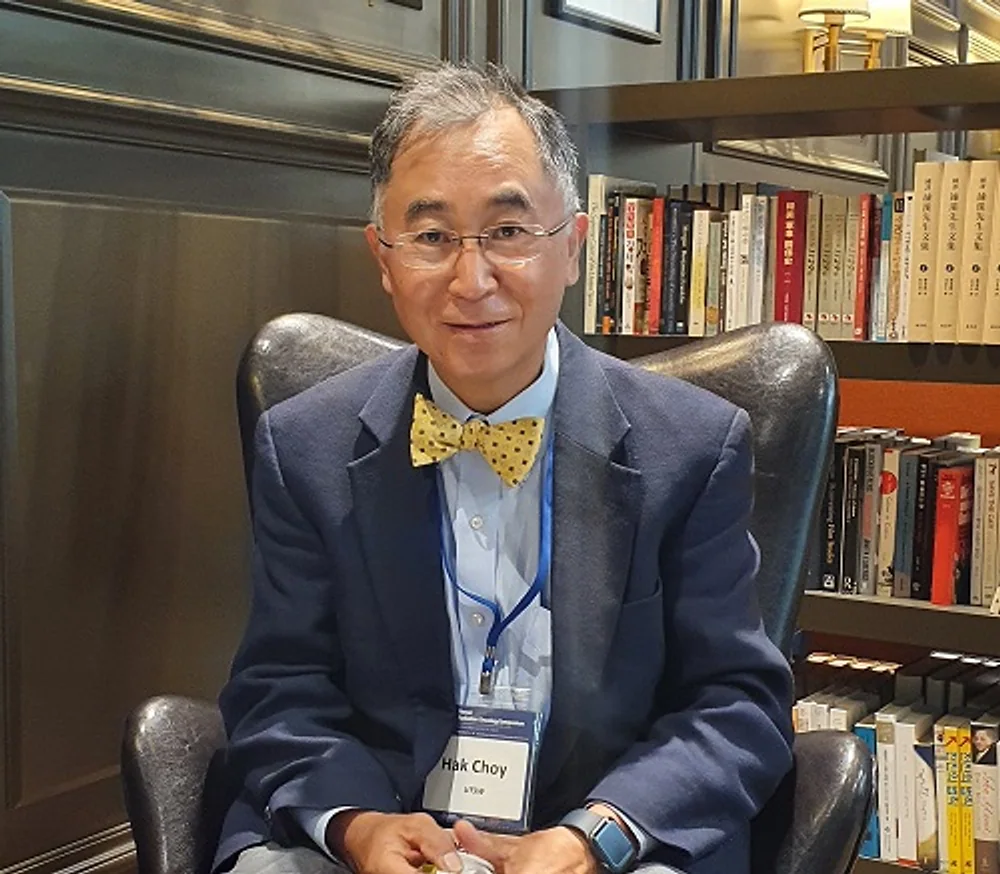
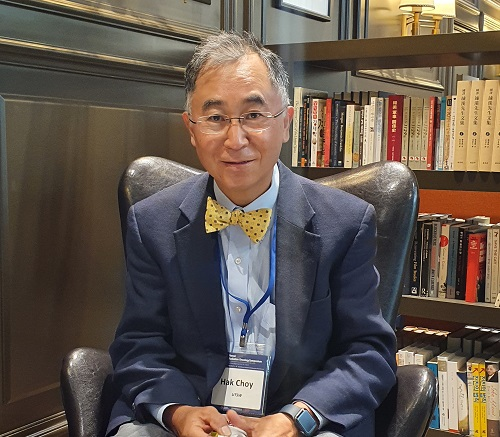
His voice was full of confidence and conviction because of spending all his life with studying radiation oncology. Hak Choy, a professor of radiation oncology at the University of Texas Southwestern Medical School, moved to the United States 43 years ago and studied the interaction between chemotherapy and radiation. He is renowned internationally with several studies that can increase the survival rate of cancer patients by the combination treatment of new chemotherapeutic agents and radiation. He designed and conducted the first clinical trial of combining paclitaxel and radiation therapy.
He voiced that he still had some regrets although he had been conducted several studies: 'shortening treatment time and frequency' and 'real-time imaging of the treatment.' For safe and precise radiation therapy, a treatment plan should be established by CT or magnetic resonance imaging (MRI), primarily. But, the problem is that the size and location of cancer can alter after the initial treatment plan. Moreover, patients position changes can affect a planned radiation field. However, the recent development of Elekta's groundbreaking radiation therapy system 'Elekta Unity,' makes customized, real-time adaptive radiation therapy for patients possible. We met Professor Hak Choy to talk about the radiation therapy paradigm that Unity has transformed.
- You are an authority on radiation therapy. What sparked your interest in that field?
It was 1979. After graduating from high school, I went to the United States to become a doctor. Luckily, I met a good advisor, Dr. Daniel D. Von Hoff, an expert on cancer treatment. I learned a lot and became interested in radiation oncology. I have conducted several studies on the combination of chemotherapy and radiation therapy.
At the time, significant opposition to this combination therapy was prevalent. However, over the past 20 years, radiation therapy technology has developed remarkably, and the therapeutic efficacy of combination therapy has been proven. In fact, in the 2000s, high-precision radiation therapy such as Intensity Modulated Radiation Therapy, respiratory gating radiation therapy, and Image Guided Radiation Therapy appeared. Recently, research on combination radiation therapy cooperated with immunotherapy is active.
- What is radiation therapy, exactly?
Radiation, distinctive energy emitted from the nucleus of an atom, is an invisible subatomic particle or electromagnetic wave. Radiation mainly used for radiation therapy includes x-rays, gamma rays, electron beams, and proton beams. Most radiation therapy uses external beam to treat cancer inside the body. It destroys cancer cells in the body, preventing its growth. The radiation dose and the irradiation time should be calculated through a complicated process to minimize damage to normal tissues.
- Currently, there is only one Elekta Unity installed in Korea.
Electa Unity is a groundbreaking Magnetic Resonance Radiation Therapy (MR/RT) system that provides personalized radiation therapy according to the real-time imaged tumor condition. Combining high-resolution 1.5 Tesla (T) MRI and industry-leading 7MV linear accelerator (Linac) technology provides real-time high-resolution MRI images containing the patient's anatomical structure and biological information at the time of treatment. Currently, it is the only system that has been installed at Gangnam Severance Hospital in Korea.
- What makes Unity unique among other radiation therapy devices?
Unity is capable of high-resolution real-time MRI imaging during radiation therapy. It took more than 20 years for the Unity product development to be completed because of the challenges from combining two physically conflicting technology - MRI and the linear accelerator. A machine that uses electricity to generate ionizing radiation, a linear accelerator, creates energy, moves at high speed, and intensively irradiates and kills the tumor even if the tumor is deep inside the body. The problem is that the magnetic field generated during the MRI operation interferes with the linear accelerator. However, several studies enabled decoupling, a new concept treatment device that has changed a cancer treatment paradigm. I expect that Unity will present new treatment options for patients with the hardest cancers such as the pancreas and lungs in the future.
- What does it mean to using high-resolution real-time MRI images during treatment?
The common goal of the medical staff performing radiation therapy is to see the maximum effect in the minimum amount of time. Therefore, the essential factor in radiation therapy is the 'accuracy' of intensive irradiation targeting only cancer cells. However, until now, radiation therapy was performed based on CT images taken a few days before treatment. Moreover, the tumor's location changes with the patient movement or breathing during treatment. Therefore, the treatment area had to be wider than the actual tumor size. In addition, even if treatment is performed based on MRI, the start of the treatment can be unintentionally delayed. In other words, it is difficult to accurately kill cancer cells because the cancer cells may have changed by the time treatment is performed. However, it is possible to adjust the treatment plan according to changes in the tumor and surrounding organs with a real-time MRI. Especially cancer is soft tissue, can be more visible on MRI.
- What do you think about the future progress of radiation therapy?
Radiation therapy is performed in several sessions. Typically five sessions a week are required for radiation therapy, and they might take as long as 7 to 8 weeks. The problem is that radiation therapy gives the patient some fatigue. Many patients feel exhausted 2-3 weeks after starting treatment. In addition, in most cases, radiation therapy performed once a day for 10 to 30 minutes as outpatient. In countries like Korea, where medical resources and patients are concentrated in big cities, patients' treatment period has to be relatively shorter. As a result, many medical device companies are continuing their research to minimize the duration of radiation therapy.
At this time, many patients questioned, 'Will there be any radiation left in the body after radiation therapy? However, there is no need to worry because there is no radiation left in the body at all after radiation therapy. Trust the medical staff and be brave to receive treatment until you finish.
![[Card News] Better Together Seoul Culture & Wellness Festival...See you on October 9 at DDP Oullim Square!](/news-images/85341c44f72401a7415c4da5ca3242f3434fe2a10935287f5b87d7acbd88ad87-480-v1.webp)