Some people feel itchy from head to toe, or find that even soft fabric brushing against their skin hurts, yet every dermatology and internal medicine test turns up nothing. In such cases, the root cause may be emotional rather than physical. Persistent itching or skin pain without a clear medical explanation can be the body’s way of flagging stress, anxiety or depression.

Dr. Kim Hee-jin, a professor of psychiatry at Chung-Ang University Gwangmyeong Hospital in South Korea, explained that itching and pain are not produced by the skin alone. “These sensations arise as signals from the skin are processed together by the peripheral nerves and the brain,” Dr. Kim said. “The two are tightly connected through the skin-brain axis, so psychological stress and anxiety can stir up the skin’s nerve and immune responses and make unusual sensations feel stronger.”
The itch-scratch cycle, and when pain points to the nerves
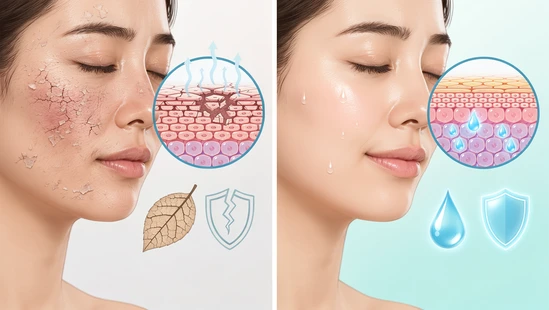
Specialists say the key is to understand how the problem feeds on itself. An itch may first appear because of a skin condition or inflammation, but scratching it again and again breaks down the skin barrier, and a weakened barrier itches even more. Because scratching feels soothing in the moment, it can quickly become an ingrained habit.
Dr. Kim noted that hypersensitivity deserves particular attention. “When even the light touch of clothing is painful, we need to look for possible neurological causes as well,” Dr. Kim said. For older adults whose itching persists without explanation, doctors should also take a close look at dry skin, the medications being taken and any systemic illness.
Treating compulsive scratching: behavior first, medication when needed
Specialists recommend consulting a psychiatrist when itching or pain continues to disturb sleep despite dermatological care, or when growing anxiety or low mood begins to disrupt everyday life. Professional help is also advised for those who keep scratching or picking at their skin even as wounds reappear, and for those who find themselves spending excessive time inspecting their skin.
Care aims both to identify any underlying disease and to change the repetitive scratching itself. For an entrenched habit, a technique called habit reversal training is often useful. Patients practice catching the moment their hand reaches for their skin and replacing the action with something else, such as squeezing a stress ball, applying a cold pack or smoothing on moisturizer. If the behavior has clear compulsive features, doctors may also prescribe medication, such as selective serotonin reuptake inhibitors (SSRIs), to help reduce scratching.
Questions and answers
Can stress or anxiety really cause itching?
Yes. Through the skin-brain axis, psychological stress and anxiety can activate the skin’s nerve and immune responses and make itching and pain feel more intense.
Why does the itch get worse the more I scratch?
Scratching breaks down the skin barrier, and a damaged barrier becomes even itchier. The brief relief scratching provides can also turn it into a hard-to-break habit.
What does it mean if light contact with clothing feels painful?
This kind of hypersensitivity can point to a neurological cause and should be evaluated. Older adults should also be checked for dry skin, medication effects and systemic illness.
When is it time to see a psychiatrist about itching?
When itching or pain keeps disrupting your sleep despite skin treatment, when anxiety or low mood affects daily life, or when you cannot stop scratching or picking even as wounds reappear.
What is habit reversal training?
It is a behavioral technique that teaches people to notice the urge to scratch and replace it with another action, such as squeezing a stress ball or applying a cold pack. SSRIs may be added when compulsive features are strong.