

Ultrasound lifting leading to natural changes... Safety enhanced with curved HIFU
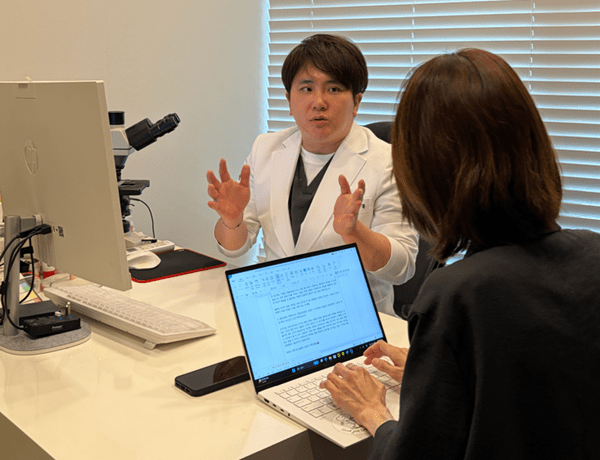
[Interview] Dr. Sin-hye Park, Miho Clinic
- UltrasoundLifting
- HIFU
- CurvedHIFU
- LINCURVEPRO
- MIHOClinic
- AntiAgingTreatment
- LiftingProcedure
- DoubleChin
- SkinElasticity
- AestheticMedicine
- SafeProcedure
- AgingManagement
- NonSurgicalLifting
- Sin-hye Park
- Dr. Sin-hye Park
- Newpong
 장인선 기자
Ultrasound lifting is a non-invasive procedure that improves skin elasticity by delivering ultrasound energy to targeted areas. With minimal downtime, it has gained significant attention among people with busy lifestyles.
In this context, Newpong, a Korean medical device company, has addressed the limitations of conventional flat HIFU devices by developing the world’s first curved HIFU system, designed to reflect the natural contours of the face. By taking facial contours and anatomical structures into account, more precise procedures are possible, allowing treatment strategies to be tailored more closely to each patient’s skin characteristics and treatment goals.
Through this special interview series featuring perspectives from clinical practice, Health Kyunghyang takes an in-depth look at the clinical significance of curved HIFU in ultrasound lifting procedures. We hope the series helps readers understand not only technological advances, but also the importance of safe and precise aesthetic procedures. <Editor’s Note>
■ Table of Contents
①Kwang-jae Lee, Head of New Pong Research Institute
② Dr. Sin-hye Park, Miho Clinic
③ Dr. Geon-hong Lee, Hong’s Skin Clinic
④ Dr. Bruno Vargas, CBV Clinic in Brazil
As safety and precision establish themselves as new standards in aesthetic medicine, ultrasound lifting technology is also evolving rapidly. Against this backdrop, Newpong’s curved HIFU device, LINCURVE PRO, which is designed to reflect the natural contours of the face, is leading a new trend in ultrasound lifting by improving satisfaction among both medical professionals and patients. We spoke with Dr. Sin-hye Park of Miho Clinic, who has extensive clinical experience in this field, about the changes that next-generation HIFU devices are bringing to clinical practice.

As safety and precision establish themselves as new standards in aesthetic medicine, ultrasound lifting technology is also evolving rapidly. Against this backdrop, Newpong’s curved HIFU device, LINCURVE PRO, which is designed to reflect the natural contours of the face, is leading a new trend in ultrasound lifting by improving satisfaction among both medical professionals and patients. We spoke with Dr. Sin-hye Park of Miho Clinic, who has extensive clinical experience in this field, about the changes that next-generation HIFU devices are bringing to clinical practice.
Q. Ultrasound lifting procedures have been gaining attention recently. Do you feel the changes in the field as well?
Of course. While in the past, people often sought thread lifting or facelifts for a more noticeable lifting effect, recently there has been a significant increase in patients preferring ultrasound lifting, which offers faster recovery and less disruption to daily life. In particular, as preventive anti-aging care has become a trend, it is no longer uncommon for people to undergo ultrasound lifting procedures as early as their 20s.
Q. What do you think are the unique advantages of ultrasound lifting?
It delivers thermal energy to the deep layers of the skin while requiring only a very short recovery period. Since patients can return to their daily activities immediately after the procedure, it is particularly suitable for busy modern lifestyles. I believe it has established itself as one of the leading lifting procedures by offering both effectiveness and convenience.

Q. The curved HIFU device is said to have overcome the structural limitations of existing devices.
The human face is not flat but consists of naturally curved contours. However, conventional HIFU devices use flat cartridges that cannot fully conform to the face, leaving gaps between the cartridge and the skin. Consequently, practitioners often had to press the device more firmly against the skin. The problem is that this process can deliver energy deeper than intended, increasing pain and posing a risk of side effects such as burns or cheek hollowing.
Q. What has been the biggest change since you began using the curved HIFU device?
The cartridge naturally conforms to the contours of the face, making the procedure much easier while allowing energy to be delivered evenly to the intended treatment areas. Since treatments can be performed exactly as planned and the results are more predictable, it enables more consistent outcomes. Another major advantage is that the procedure can often be performed without anesthesia because the pain is minimal.

Q. How satisfied have patients been with the treatment?
Patients are most satisfied with the fact that the procedure involves minimal pain. Pain is one of the factors that patients find most burdensome when considering cosmetic procedures. Even patients who previously hesitated because of painful experiences with ultrasound lifting often say after the procedure, "It wasn't as painful as I thought."
Q. Which patients are the best candidates for ultrasound lifting?
It is particularly suitable for patients whose lower face has begun to sag or who have developed a double chin. It is especially effective for patients who still have some cheek fat and maintain facial volume but have lost skin elasticity.
On the other hand, if a patient lacks cheek volume, it can be difficult to achieve optimal results with ultrasound lifting alone. In such cases, combining it with other procedures, such as fillers, can produce more natural and satisfying results.

Q. What is the most important factor to consider when performing an ultrasound lifting procedure?
It is essential to accurately analyze the patient's facial structure and pattern of sagging. To achieve this, the face is examined from multiple angles—including the front, 45-degree angles, and the sides—to determine where energy should be concentrated. Since every patient has a different facial structure and aging pattern, a personalized treatment plan is essential for achieving safer and more natural results.
Q. There is a growing trend toward natural-looking results. Do you think ultrasound lifting fits this trend?
Absolutely. Many patients tell me, "I want to look more beautiful without it being obvious." One of the greatest advantages of ultrasound lifting is that patients can return to their daily lives immediately after the procedure while improvements in skin elasticity develop gradually over time. I believe it aligns perfectly with today's trend of managing aging naturally while preserving one's original appearance rather than creating artificial-looking changes.

Q. What advice would you give to someone considering ultrasound lifting for the first time?
Above all, it is important to determine whether ultrasound lifting is truly suitable for your facial characteristics. For example, if you have very little cheek volume, other procedures such as fillers may be more appropriate. Likewise, if you have significant pigmentation, it may be better to undergo laser treatment first.
Furthermore, higher treatment intensity does not necessarily produce better results. What matters far more is delivering the appropriate amount of energy precisely to the areas that need it.
The results do not appear overnight. They usually develop gradually over about a month, so it is advisable to consult with a qualified physician and establish a long-term anti-aging plan.
Q. What lifestyle habits do you recommend for maintaining the results of the procedure?
Sun protection and adequate moisturization are essential. In addition, maintaining a stable body weight and avoiding sudden weight fluctuations are important. Since this procedure targets the fat layer, significant changes in body weight can affect the longevity of the lifting results.