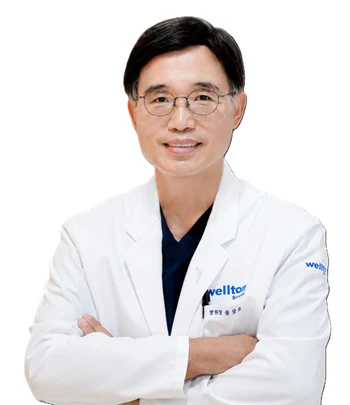
Neighborhood clinics are often thought of as little more than nearby, convenient places to see a doctor. Yet through challenges ranging from the COVID-19 pandemic to the dispute over medical school enrollment quotas, they have quietly served on the front line of public health. The “Local Physician Spotlight” series features doctors who stay true to their medical convictions while caring for the health of their communities. In this installment, we meet Han Jin Woo, director of tovit clinic. <Editor’s note>
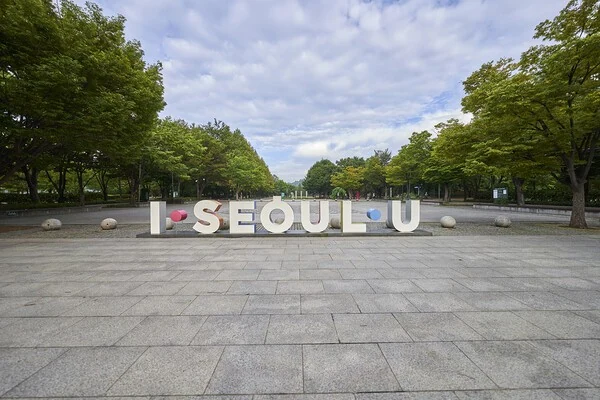
Seoul’s Gangnam-gu, which includes Apgujeong, has one of the highest concentrations of medical institutions in the country, among them major hospitals with round-the-clock emergency departments such as Samsung Medical Center and Gangnam Severance Hospital. Apgujeong itself is known for its residents’ keen interest in beauty and wellness, and many patients travel there from elsewhere for the treatments they are looking for.
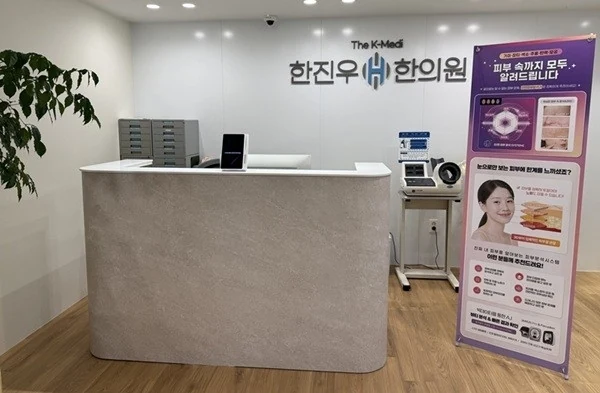
This is the neighborhood Director Han Jin Woo has chosen for his next chapter. Widely recognized from his many TV appearances, he spent years caring for patients at Insan Korean Medicine Clinic in Hoegi-dong before relocating his practice to Apgujeong and reopening it as tovit clinic.
“Patients in Apgujeong usually look into the treatment they want before coming in, so they are very interested in how it works and how it will be planned,” Director Han noted.
Being in a medical hub was only part of the reason for the move, however. He also wanted patients from all over Korea to reach him more easily, and to give international visitors a closer look at Korean medicine.
“For more than 50 years, the clinic was rooted in Hoegi-dong. It feels like home. But more and more people were coming from every corner of the country for skin treatments and personalized herbal prescriptions after seeing us on YouTube and other channels, and that made me think hard about access. Apgujeong is convenient not only for people in Seoul and the surrounding region but for patients nationwide, and it is easy to find for international visitors drawn to K-culture and medical tourism.”
His ambition rests on the idea that what is most distinctly Korean is also what resonates most widely around the world. “I wanted visitors from abroad to experience a genuinely Korean form of care, one that pairs traditional Korean medicine, including acupuncture, Chuna and herbal remedies, with aesthetic treatments,” he said.
Caring for the body inside and out
Integrative Korean medicine is the concept Director Han places at the heart of his new practice. Its essence is balance: pairing Korean medicine with modern science and technology without favoring one over the other, so that both the inside and the outside of the body are looked after.
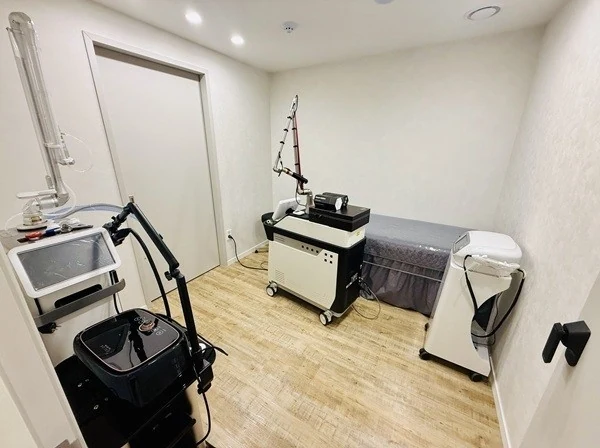
The new clinic therefore covers skin health care in addition to pain treatment and personalized herbal medicine. Depending on each patient’s condition and goals, treatments such as Chuna therapy, acupuncture and pharmacopuncture using wild ginseng or Jahageo (placenta) may be followed by laser skin toning and regeneration or Korean medicine skin boosters. For women in midlife, he looks at menopause-related changes throughout the body alongside signs of skin aging.
“Aesthetic skin care using high-tech equipment is a fast-growing market, but treating only the surface has its limits. The integrative Korean medicine I practice brings together internal treatment (內治), grounded in Korean medicine, and external treatment (外治), which draws on modern technology, so that the patient is treated as a whole.”
Safety before speed
New treatments and devices aside, one rule has guided Director Han through more than two decades in practice, and it has never changed: patient safety.
“My first and firmest principle is safe treatment without side effects. I don’t chase quick results with aggressive procedures or take chances. Even if a condition is cured, the treatment itself must never harm the patient.”
Surrounded by so many clinics, patients in Apgujeong arrive with a wide range of expectations and requests. He stressed that this makes it all the more important not to simply perform whatever a patient asks for, but to settle on the right treatment through careful explanation and dialogue. He takes the same approach to chronic pain and personalized herbal medicine as he does to aesthetic care.
“Because there are so many clinics here, patients hold very high standards. In the end, though, sincerity matters most. Using years of clinical experience to explain clearly why a treatment is needed, and then delivering it safely, is the surest way to win trust.”
Surviving colorectal cancer deepened his belief in prevention
Director Han knows health not only from the doctor’s side of the desk. He was diagnosed with stage 3 colorectal cancer and went through treatment himself. Having overcome the disease, he now speaks openly about his experience to encourage regular screening.
“Please don’t keep postponing your colonoscopy. When I had stage 3 colorectal cancer, I had none of the classic symptoms that would have warned me.”
The experience reshaped how he views his patients. It taught him firsthand that listening to one’s body and catching disease early matter as much as treating illness once it appears.
“The first place you think of when you’re not feeling well”
Even as the clinic’s services have grown, Director Han’s vision for it remains modest. Rather than a showcase for flashy techniques, he wants it to be a trusted “family doctor” that people can visit without hesitation whenever something feels wrong.
“I want the clinic to be strong across the board, from pain treatment and personalized herbal prescriptions to skin health care. More than anything, I hope people remember it as ‘the primary care clinic they trust and think of first when they are unwell.’”
Looking further ahead, he hopes to widen the meeting point between traditional Korean medicine and modern science and technology, and to establish his integrative approach as a model others can follow.
“I want to act as a bridge that helps the Korean medicine community make fuller use of today’s advanced science and technology. My hope is that tovit clinic becomes a model of integrative Korean medicine where tradition and modern science work hand in hand, and that it can point the way forward for younger and fellow Korean medicine doctors.”
Honoring the knowledge Korean medicine has built up over the years while staying open to new technology: it is at this crossroads that Director Han Jin Woo is crafting his own version of K-medicine.
Profile: Director Han Jin Woo
Director Han Jin Woo is a Korean medicine doctor with more than 20 years of clinical experience who has long shared Korean medicine health information through TV programs and YouTube. After many years of running a clinic in Hoegi-dong, he moved his practice to Apgujeong-dong in Seoul’s Gangnam-gu in July 2026 and reopened it as tovit clinic. His new direction of care is “integrative Korean medicine,” which combines traditional Korean medicine such as acupuncture, herbal medicine and Chuna with modern science and technology, and his guiding principle is “safe treatment that never harms the patient.”
Questions and answers
Where is tovit clinic located?
tovit clinic is in Apgujeong-dong, Gangnam-gu, Seoul. Director Han Jin Woo moved his long-standing Hoegi-dong practice there in July 2026.
What does “integrative Korean medicine” mean at tovit clinic?
It refers to Director Han’s approach of combining internal treatment (內治) from Korean medicine, such as acupuncture, herbal medicine and Chuna, with external treatment (外治) that uses modern technology, so the body is cared for inside and out.
Which treatments are offered at tovit clinic?
The clinic provides pain treatment, personalized herbal prescriptions and skin health care. Depending on a patient’s condition and goals, Chuna, acupuncture and pharmacopuncture may be combined with laser skin toning and regeneration or Korean medicine skin boosters.
How would you describe Director Han Jin Woo’s approach to patient care?
He puts “safe treatment without side effects” first. He avoids aggressive procedures aimed at quick results and decides on treatment through clear explanation and open dialogue with each patient.
Why does Director Han urge people not to skip colonoscopies?
He was diagnosed with stage 3 colorectal cancer despite having no classic warning signs. That experience convinced him that early detection matters as much as treatment.
What is Director Han Jin Woo’s background?
He is a Korean medicine doctor with more than 20 years of clinical experience, known for sharing health information on TV and YouTube. He practiced for many years at Insan Korean Medicine Clinic in Hoegi-dong before reopening as tovit clinic in Apgujeong.
Can I receive aesthetic skin care at a Korean medicine clinic in Seoul?
Yes. tovit clinic offers skin health care, including laser skin toning and regeneration and Korean medicine skin boosters, alongside Korean medicine treatment. Its philosophy is to consider the whole body rather than the skin’s surface alone.
How does Korean medicine approach skin aging during menopause?
At tovit clinic, menopause-related changes throughout the body are assessed together with skin aging. Korean medicine’s internal treatment supports overall health, while external treatment with modern equipment addresses the skin.
Is there a Korean medicine clinic in Apgujeong that treats pain?
tovit clinic in Apgujeong-dong treats pain with Chuna therapy, acupuncture and pharmacopuncture such as wild ginseng and Jahageo (placenta). Chronic pain care follows the same principles of thorough explanation and safe treatment.
Is tovit clinic convenient for international visitors?
Director Han chose Apgujeong partly so that visitors interested in K-culture and medical tourism could find the clinic easily. He aims to introduce them to K-medicine that blends traditional Korean medicine with aesthetic treatments.