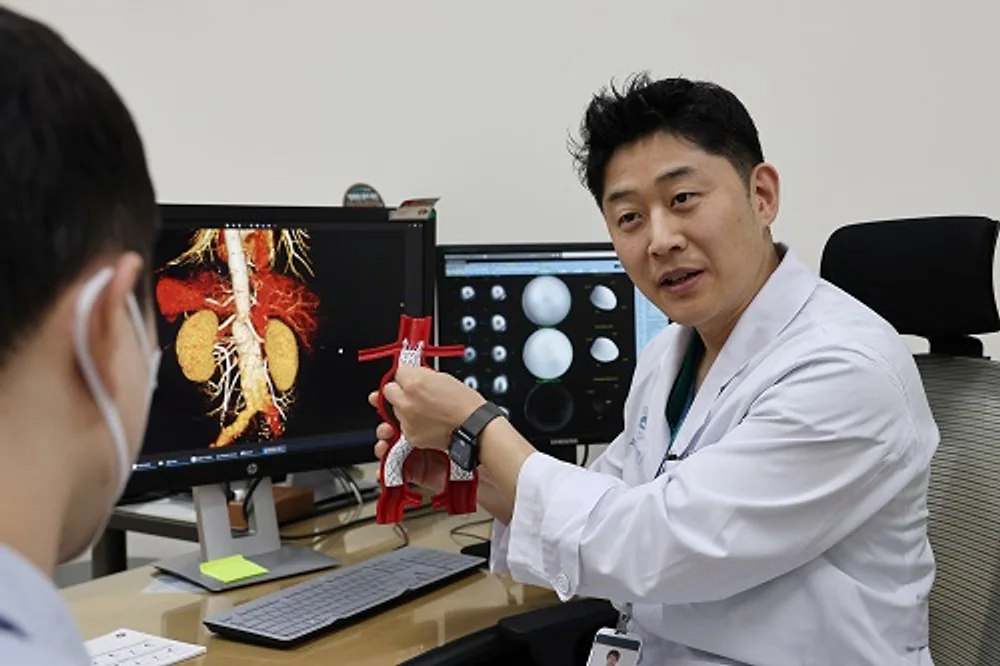
With the aging population, there is an increasing need for attention to cardiovascular diseases. As people age, muscle strength decreases, joints weaken, and blood vessels also lose elasticity and harden, leading to various illnesses.
At this time, a condition that requires particular caution is aortic aneurysm. Aortic aneurysm is a condition where the largest blood vessel in our body, the aorta, originates from the heart and supplies blood throughout the body, enlarging and bulging. This condition is hazardous because it can swell and rupture without significant warning symptoms. At such times, it is known to be highly fatal, with 9 out of 10 individuals reported to die.
In particular, abdominal aortic aneurysm accounts for about 75% of all aortic aneurysms, requiring even more careful attention. A typical abdominal aorta has a diameter of 2cm, and when it expands to 3cm or more, it is diagnosed as an abdominal aortic aneurysm. Although the exact cause is not fully understood, it is known to occur as the vascular wall weakens due to degenerative changes. It mainly occurs in individuals aged 60 and above, with smoking being the most significant risk factor. Chronic conditions such as hypertension, diabetes, dyslipidemia, and family history also play a role.
Unfortunately, most patients do not feel symptoms when the abdominal aorta bulges. Feeling symptoms implies that the condition has already progressed considerably. Symptoms may include a pulsating mass in the abdomen and mild abdominal or back pain, which should prompt immediate assessment for the possibility of rupture. If it ruptures suddenly without warning signs, severe pain in the abdomen and back, along with low blood pressure, can occur rapidly, leading to a state of shock. In such cases, there is a high risk of death before reaching the hospital.
It is fortunate that it is discovered through health screenings. Even though we cannot reverse the already enlarged blood vessel, if it is found before rupture, procedures or surgery can prevent further dilation of the aorta.
Professor Kwon Jun-gyo from the Vascular Surgery Department at Asan Medical Center in Seoul stated, "If the size of an abdominal aortic aneurysm is less than 5-5.5cm, the risk of rupture is rare, so medication therapy may be administered. However, if it is larger than this range or rapidly increasing in size, or if symptoms such as pulsation in the abdomen are present, there is a risk of rupture, necessitating proactive treatments such as surgery or procedures."
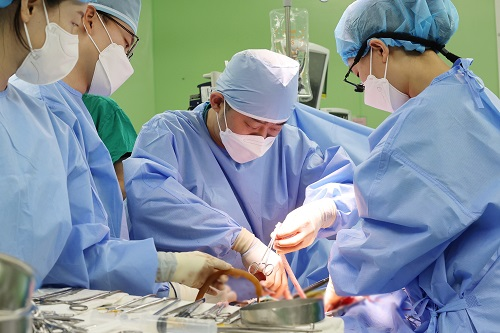
Surgery, known as artificial blood vessel replacement surgery, involves incising the area of the aortic aneurysm and inserting an artificial blood vessel. While the risk of recurrence is low after the first procedure, patients must endure pain and bleeding due to the extensive incision.
The procedure involves inserting a stent encased in an artificial blood vessel through the femoral artery in the groin. This method ensures blood flows only within the artificial blood vessel, preventing pressure on the aneurysmal blood vessel wall. It is performed on high-risk patients and has relatively less pain than surgery. However, there is a risk of blood leakage or stent migration, which could lead to the recurrence of the aneurysm, necessitating regular check-ups and medical examinations. In case of complications, additional surgery may be required.
Professor Kwon Jun-gyo stated, "Considering the advantages and disadvantages of each treatment method, surgery is recommended over procedures for patients with a life expectancy of more than ten years." He added, "However, in Korea, there are not many vascular surgeons who perform aortic surgery, so in fact, procedures are more commonly performed than surgeries."
In such circumstances, Seoul Asan Hospital operates an Aortic Disease Center to provide optimized treatment. Through collaboration among various departments, such as vascular surgery, cardiology, and radiology, the center assesses the size, characteristics, and location of abdominal aortic aneurysms to offer personalized treatment plans to patients. Consequently, surgical and interventional procedures for abdominal aortic aneurysms are performed in approximately equal proportions. Additionally, a 24-hour emergency process has been established to enable immediate surgery upon diagnosis to address emergency situations such as rupture.
Professor Kwon Jun-kyo emphasized, "Abdominal aortic aneurysms often present without warning symptoms, but fortunately, they do not progress rapidly, and immediate rupture is uncommon." He further stressed, "Considering the various treatment options available depending on the patient's condition, it is important not to be anxious. Instead, consult with experts and establish a treatment plan through thorough discussion to actively pursue treatment."
Preventing abdominal aortic aneurysms entirely is challenging. However, since the risk factors are relatively well known, thorough management can aid in prevention and early detection. The Korean Society of Cardiology recommends screening, especially for men over 60 with a family history of the condition or long-term smoking habits. Above all, smoking is a significant risk factor for the occurrence and progression of aneurysms, so quitting smoking is imperative after diagnosis, regardless of the cause.
![[Card News] Better Together Seoul Culture & Wellness Festival...See you on October 9 at DDP Oullim Square!](/news-images/85341c44f72401a7415c4da5ca3242f3434fe2a10935287f5b87d7acbd88ad87-480-v1.webp)