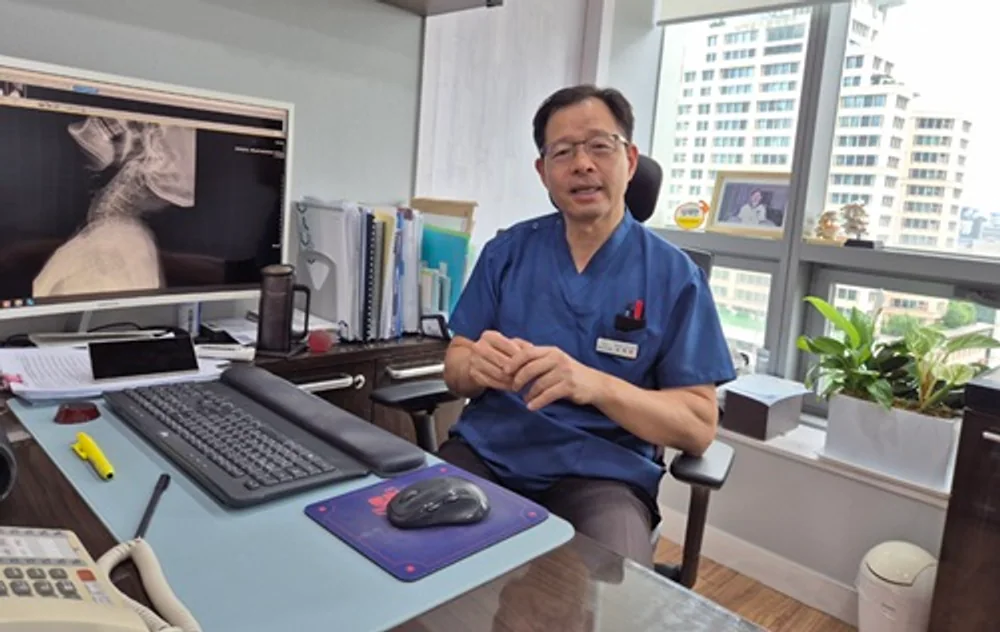
Director JaeHyun Shim: 'The therapeutic effect increases if you consume enough nutrients, such as vitamin C
Prolotherapy, which treats chronic musculoskeletal pain patients, is now a widely implemented medical technique in many healthcare facilities. With minimal side effects, prolotherapy improves the quality of life for chronic pain patients by addressing the underlying cause of pain. We learned more about this from Director Jae-hyun Shim of Cheongdam Madi Spine Clinic, who has conducted over 62,000 treatments.
- What is prolotherapy?
Prolotherapy is a regenerative injection therapy that involves injecting dextrose into damaged or loosened ligaments, tendons, and joints to promote regeneration and proliferation, thereby relieving chronic pain and restoring function in the affected area. Developed by Dr. Hackett in the United States in the 1950s, this treatment involves injecting high concentrations of dextrose into areas of chronic pain to stimulate the body's healing mechanisms, promoting the regeneration of ligaments and tendons.
-Who should receive prolotherapy?
This treatment is necessary for patients suffering from chronic musculoskeletal pain. It is particularly suitable for individuals with damaged or weakened ligaments and tendons or those experiencing joint pain due to degenerative diseases.
- Which areas can be treated with prolotherapy?
Prolotherapy can be applied to a variety of conditions, including herniated discs in the lower back and neck, spinal stenosis, rotator cuff tears in the shoulder, tennis elbow, golfer's elbow, triangular fibrocartilage complex (TFCC) injuries in the wrist, pelvic pain, degenerative knee osteoarthritis, knee ligament or tendon injuries, ankle sprains, and plantar fasciitis.
-What is the Frequency of prolotherapy treatments?
Prolotherapy treatments are typically administered every 2 to 4 weeks, with about 3 to 6 sessions needed for approximately 80% of patients to experience recovery. However, the response to treatment can vary significantly between individuals. Younger patients with less severe damage may fully recover with just 1 or 2 sessions. In comparison, older patients or those with underlying conditions and diminished healing capacity may require more than six treatments.
The Frequency of prolotherapy treatments varies depending on the individual's condition. During recovery, it is essential to consume sufficient water and nutrients, including vitamins (photo: Clipart Korea).
-We heard about the reports of recent advancements in ultrasound-guided prolotherapy.
Traditional prolotherapy was primarily an injection treatment based on palpation. However, a new method using high-resolution musculoskeletal ultrasound equipment has been developed, allowing prolotherapy to be performed while observing the ultrasound. This method causes less pain and allows precise injections, avoiding nerves and blood vessels, making it safer and more effective.
- What should be noted during prolotherapy?
Prolotherapy is entirely different from steroid injection therapy. Additionally, recovery occurs through three phases: the inflammatory phase, the proliferative phase, and the remodeling phase. Discomfort may be experienced during the inflammatory phase. To maximize the therapeutic effects, it is advisable to drink about two liters of water and consume sufficient nutrients necessary for recovery, such as vitamins C, B, and D and magnesium.
-Are there any notable successful cases of prolotherapy treatment?
A Korean expatriate from Australia, diagnosed with a herniated disc due to severe lower back and leg pain, underwent prolotherapy. A year later, upon returning to Korea, the patient reported having been pain-free, and an MRI showed the herniated disc had been absorbed and disappeared, expressing gratitude. Herniated discs causing only pain and leg numbness can often be treated with prolotherapy injections without the need for surgery.
Another case involved a high school student studying ballet in the United States who experienced severe hip and knee pain. This pain prevented her from standing on one leg or squatting properly, thus hindering her classes. Despite showing no abnormalities on an MRI in the United States, she was diagnosed with severe flat feet and received prolotherapy on her feet. Two weeks later, her pain had almost completely subsided, and she is now studying in the United States without any issues.
![[Card News] Better Together Seoul Culture & Wellness Festival...See you on October 9 at DDP Oullim Square!](/news-images/85341c44f72401a7415c4da5ca3242f3434fe2a10935287f5b87d7acbd88ad87-480-v1.webp)