The constant news of rhinoplasty anesthesia accidents brings great fear to patients ahead of surgery. People who have already experienced surgery, big or small, may have been worried at least once about what to do if they can't wake up from anesthesia.
In general, anesthesia is not just a medical procedure, which is never like waking up from a nap, but a specialized medical field that is responsible for patient’s safety in the entire process of surgery from the beginning to the end, including closely monitoring and managing the consciousness of patients who have been transferred to the recovery room after surgery and being prepared for emergencies that cannot be expected.
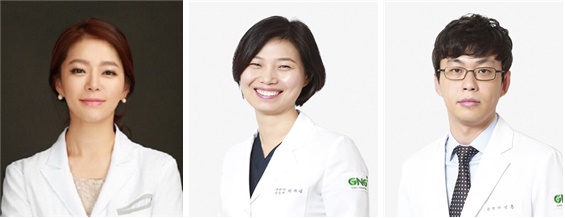
Likewise, anesthesia protects a patient's life through a medical process that is never simple. Therefore, the importance of anesthesia should be carefully examined even when performing rhinoplasty due to nasal disease. Through a discussion with Lee Seong-hun, an ENT specialist at GNG Hospital, and Park Hee-jeong, an anesthesiologist, we examined the importance of anesthesia that is easy to be overlooked in terms of rhinoplasty.
Reporter: There are many cases of surgery due to nasal problems recently. What’s the biggest difference between rhinoplasty and cosmetic surgery?
Lee: Many people consider surgery when they experience discomfort in their daily lives due to difficulty breathing from nasal congestion. First, functional surgery corrects nasal congestion when it occurs due to structural deformation inside the nose. But cosmetic surgery improves the appearance of the nose such as a nose bridge and nose tip to supplement the patient’s insecurities. Lately, operating functional surgery and cosmetic surgery at the same time is preferred.
Reporter: What are some methods of nasal disease surgery?
Lee: Typical nasal diseases are enlarged turbinates, septum deviation, and nasal valve stenosis, all of which are diseases that deform the internal structure of the nose and make it difficult to treat with drugs.
First of all, enlarged turbinates cause nasal congestion due to the enlarged mucous membrane inside the nose. Use high-frequency lasers to reduce the size and free space through submucosal dissection and lateral osteotomy. It is important to minimize mucous membrane damage when resecting the enlarged turbinates, and excessive space with reckless resection can reduce the balance function of controlling the temperature and humidity of the nose.
The nasal deviation is a condition in which the septum cartilage perpendicular to the center of the nose bends into C or S shapes, disrupting breathing. Surgery to straighten the septum cartilage can improve nasal congestion. Excessive resection when calibrating the septum leads to the septum cartilage, which holds the center, losing strength. In this case, side effects such as saddle nose and perforation can occur, so minimal cartilage resection technique is required.
Nasal valve stenosis is caused by nasal congestion due to the narrow airflow in the upper part of the nose that serves as the roof of the nose. Narrower nasal valves can be restored through nasal valve reconstruction and should be improved together if it is accompanied by septum deviation.
Reporter: Why do you need an anesthesiologist for nose surgery?
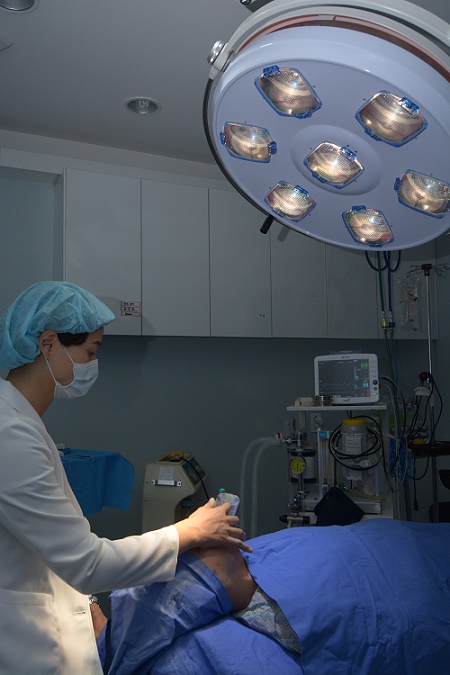
Lee: If the doctor is in an environment where he can focus solely on surgery, of course, the results of the surgery will be good. If you don't have an anesthesiologist during nose surgery, only sedation is possible. Blood pressure, pulse, and vital signs should be closely monitored from time to time to check the patient's anesthesia condition during surgery even if it is sedation.
Reporter: Is general anesthesia only possible with an anesthesiologist?
Lee: General anesthesia is a specialized area that can only be carried out by an anesthesiologist. Above all, an anesthesiologist is professionally trained in case of emergencies that could occur during surgery, so they can respond quickly and safely in the event of a problem.
Reporter: What’s the role of an anesthesiologist before and after surgery?
Park: An anesthesiologist is responsible for the overall safety of anesthesia during surgery. They analyze whether anesthesia is possible via preoperative examinations, monitor the injection of anesthetic agents, airway intubation, and condition during surgery, and manages stable recovery of patients after surgery.
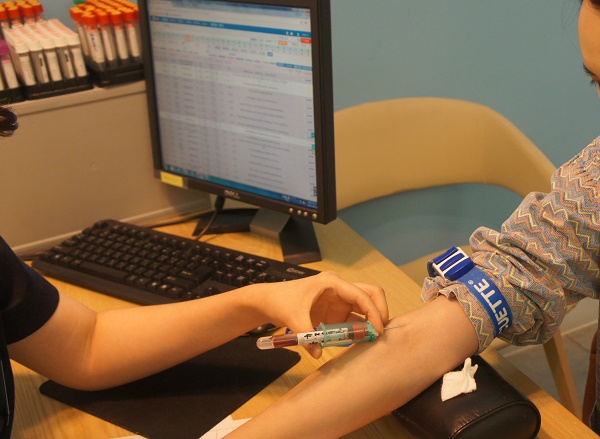
Reporter: What are the types of preoperative examination for safety for rhinoplasty anesthesia?
Park: Blood tests, urine tests, ECG tests, and chest x-ray tests are conducted. The types and capacities of anesthesia drugs are determined, and an anesthesia plan is established by combining the test results and the patient's medical history and health and physical condition.
Reporter: Are there cases of the surgery getting canceled as a result of the pre-operative examination?
Lee: There are quite a few cases where a disease is found and then surgery gets canceled. There were cases where people with a high liver somatic index or heart diseases were found from specialized cardiology due to abnormal ECG results. In terms of women, sometimes it’s a pregnancy that they didn't even know about.
Reporter: Which one is good for nose surgery: deep sedation or general rhinoplasty anesthesia?
Lee: For a relatively simple nasal surgery is operated with deep sedation. However, topical anesthesia is required for closed reduction for nasal bone fracture, which is difficult to bear, so deep sedation is carried out to reduce nasal pain and surgical fear. This is advantageous for relatively short surgeries.
On the other hand, deep sedation is possible if the surgery is complicated and takes a long time, but general anesthesia is safer. Performing functional and cosmetic surgery simultaneously during rhinoplasty is considered a big surgery. Also, general anesthesia is safer because there is no involuntary movement of the patient.
Reporter: Do you have to undergo general anesthesia for nose surgery? If so, what is the reason?
Park: When you go through general anesthesia during nose surgery, you become completely unconscious and do not wake up during the surgery. Also, even if blood flows through the tracheal intubation, the operation can be performed more safely by preventing inhalation and reducing the possibility of hypoxia.
Reporter: What’s the process of general anesthesia for nose surgery?
Park: First we check if the patient can undergo general anesthesia based on the test results acquired before the surgery, and if there’s no issue, the patient is moved to the operating room and is checked up one last time. Then we make the patient take a deep slow breath and administer an intravenous anesthetic, and then anesthesia begins a minute later.
Next, we perform artificial respiration with inhalation anesthesia. At the end of the operation, the anesthetic is discontinued, and we allow only oxygen to be absorbed to restore the patient's consciousness. Meanwhile, we reverse the muscle relaxant so that natural breathing returns, waking the patient up from anesthesia. Once the surgery is complete, we move the patient to the recovery room, and when vital signs, blood pressure, pulse, and oxygen saturation are back to normal and the patient is fully conscious, we move them to the hospital room.
Reporter: What are the risks and side effects of general rhinoplasty anesthesia?
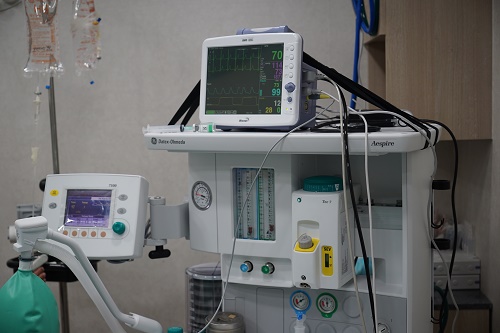
Park: General anesthesia is not dangerous itself as it is carried out after preoperative examination and the patient’s condition is checked. However, since it is a complete mechanical breathing system, in case of various hazards, it’s necessary to prepare properly by being equipped with anesthesia machines with proven safety in terms of facilities and electrical facilities in case of power outages.
Very rarely, an emergency can arise from malignant hyperthermia, which increases body temperature rapidly during general anesthesia. This can also be solved by administering a drug called dantrolene.
Side effects that the patient may experience include airway discomfort for some time due to the insertion of the airway after anesthesia, shaking teeth, or damaging laminates. However, an anesthesiologist observes the patient's condition before, during, and after surgery, so you don't have to be too afraid.
Reporter: How can the public check if there is an rhinoplasty anesthesiologist?
Lee: You can contact the clinic or look up the clinic website for the profiles of anesthesiologists.
![[Card News] Better Together Seoul Culture & Wellness Festival...See you on October 9 at DDP Oullim Square!](/news-images/85341c44f72401a7415c4da5ca3242f3434fe2a10935287f5b87d7acbd88ad87-480-v1.webp)