Pancreatic cancer is often referred to as "invincible." It is challenging to diagnose due to its deep location within the body, and even if treated, the prognosis is typically poor.
However, recent advancements in medicine and interdisciplinary medical teams have made previously inoperable patients return to their daily lives after surgery.
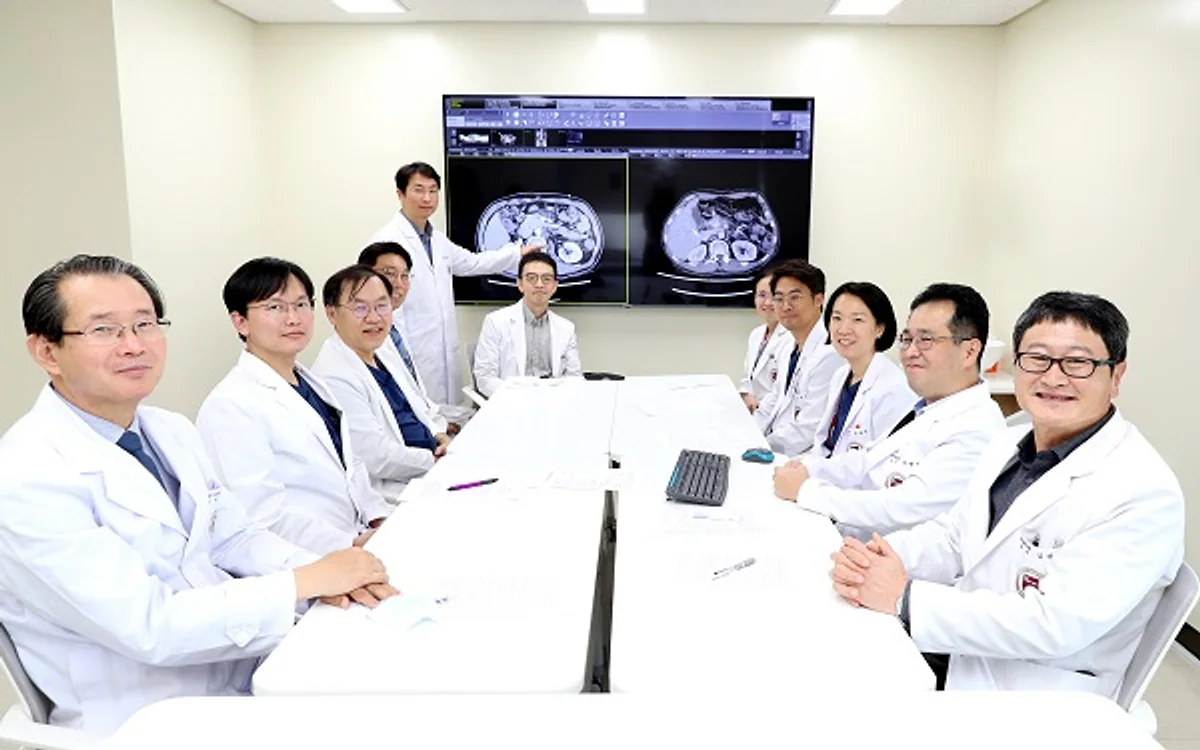
This article discusses the work of the interdisciplinary team at the Pancreatic and Biliary Center of Korea University Guro Hospital.
Pancreatic cancer is often considered inoperable by the time it reaches stage 3, especially when cancer cells invade the celiac artery. However, recent developments have changed the landscape of treatment. Preoperative chemotherapy, a global trend, has extended the survival period for patients who were previously deemed inoperable.
■ Patient's Condition at the Time
A 61-year-old man, referred to as Mr. Lee, initially sought medical attention at a local hospital due to severe abdominal pain. After a computed tomography (CT) scan, multiple suspicious lymph nodes were found, raising the suspicion of pancreatic cancer. In January 2022, he visited Korea University Guro Hospital for further evaluation. To obtain a more precise diagnosis, additional tests, including magnetic resonance imaging (MRI) and positron emission tomography-CT (PET-CT), were conducted. The final pathological examination revealed stage 3 pancreatic cancer, which had invaded the celiac artery.
■ Transforming Inoperable into Operable
Mr. Lee's case was complicated because the cancer had spread to lymph nodes near the abdominal aorta, making surgery extremely difficult. However, the medical team did not give up hope on performing surgery. Advances in pancreatic cancer treatment, particularly the improved efficacy of chemotherapy, led the team to believe that surgery might be possible after successful preoperative chemotherapy. Mr. Lee embarked on a three-month journey of preoperative chemotherapy.
■ From Tissue Analysis to Surgery to Postoperative Care
▲ Gastroenterology: Tissue analysis is crucial for cancer treatment. The tumor's location in the body's central area posed a challenge, but Professor Kim Hyo-jeong used endoscopic ultrasound to perform tissue analysis accurately. Professor Kim explained that this technique provides close access to organs near the digestive tract and is especially beneficial for observing pancreatic tumors that are hard to detect with standard abdominal ultrasounds.
▲ Pathology: Professor Kim Baek-hee discussed how the recently introduced digital pathology system at the hospital significantly reduced the time needed for cancer diagnosis. This system displays tissue samples on a monitor, eliminating the need for manual microscope analysis.
▲ Oncology Department: Professor Oh Sang-cheol, who determined the optimal chemotherapy based on tissue analysis results, closely monitored the treatment response. He safely administered a total of four rounds of chemotherapy, and the results showed a significant reduction in cancer invasion into surrounding blood vessels and tissues. With the significant improvements in the effectiveness of conventional cytotoxic chemotherapy, surgery became a viable option for patients who were previously considered inoperable.
Professor Oh expressed optimism about the potential synergy effects when incorporating immune checkpoint inhibitors and targeted therapies, which are currently being studied in clinical trials.
▲ Department of Radiology and Nuclear Medicine: Professors Kim Jeong-woo (Radiology) and Cho Gwan-hyung (Nuclear Medicine) played crucial roles in the preoperative preparation process. Professor Kim Jeong-woo closely observed the condition of blood vessels through vascular angiography to assess surgical feasibility.
Additionally, Professor Cho Gwan-hyung conducted PET-CT scans to determine the presence of distant metastasis. If distant metastasis had been detected, surgery would have been deemed impossible. Fortunately, a final assessment confirmed that extensive pancreatic resection, including the celiac artery, was feasible, allowing the surgery to proceed as planned.
▲ Department of Hepato-Biliary-Pancreatic Surgery: Although it was a challenging surgery involving the resection of the celiac artery, the Hepato-Biliary-Pancreatic Surgery team, with their extensive clinical experience and expertise, successfully completed the complex procedure lasting for six hours.
The patient was discharged without any significant complications just ten days after the surgery. Subsequently, the multidisciplinary team continued to monitor his condition diligently, administered additional cancer treatments, and, ten months later, identified a local recurrence. Swiftly, they initiated radiation therapy, and the patient is currently able to maintain his daily life while undergoing treatment.
Professor Kim Wan-Jun from the Department of Hepato-Biliary-Pancreatic Surgery stated, "This is a significant case where we made previously inoperable patients operable, leading to a much longer survival period than expected." He emphasized, "Continuous multidisciplinary treatment after surgery enabled us to detect recurrences early and make prompt decisions regarding treatment directions."
■ Not just my patient, but everyone's patient.
"Instead of considering them as my patients, we approach every case as 'our collective patient'," said Dr. Kim Jae-Seon, the head of the Pancreatic and Biliary Duct Center. Every Tuesday at 12:30 PM, the multidisciplinary team gathers in a meeting room rather than a restaurant for their regular meetings. Dr. Kim further stated, "With this mindset, nobody expresses complaints even when we meet during lunchtime."
After the meetings, patients and their families join to discuss treatment options and have a question-and-answer session. Dr. Kim Wan-Bae from the Department of Hepato-Biliary-Pancreatic Surgery mentioned, "Through these interactions, we not only build trust with the medical team but also boost the patient's determination for treatment unless there is an urgent surgical procedure."
In conclusion, the multidisciplinary team emphasized that even highly notorious diseases like pancreatic cancer can witness improvements in survival rates and quality of life through multidisciplinary treatments. They encouraged patients not to be discouraged and give up easily.
Tips on Preventing and Managing Pancreatic Cancer Provided by the Korea University Guro Hospital Pancreatic and Biliary Duct Center:
1. Quit Smoking: Smoking is a major risk factor for pancreatic cancer, and quitting smoking significantly reduces the risk of developing it.
2. Limit Alcohol Consumption: Excessive alcohol consumption increases the risk of pancreatic cancer, so it's important to drink alcohol in moderation.
3. Maintain a Balanced Diet: Consume a well-balanced diet that includes a variety of fruits, vegetables, and whole grains while reducing the intake of red meat and processed meats.
4. Manage Chronic Conditions: Effectively manage chronic conditions such as diabetes and chronic pancreatitis, as these conditions can elevate the risk of pancreatic cancer.
5. Regular Screening: If you have risk factors or a family history of pancreatic cancer, consider undergoing regular abdominal CT scans to detect potential issues early.
![[Card News] Better Together Seoul Culture & Wellness Festival...See you on October 9 at DDP Oullim Square!](/news-images/85341c44f72401a7415c4da5ca3242f3434fe2a10935287f5b87d7acbd88ad87-480-v1.webp)