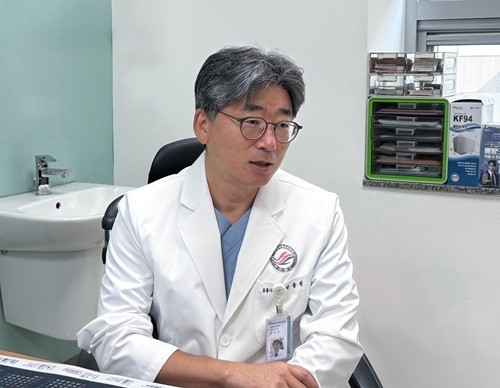
Chronic obstructive pulmonary disease (COPD) is a chronic respiratory disease in which lung function, once damaged, is difficult to restore to normal. The problem is that early symptoms are not obvious, so many patients are unaware they have the disease. In particular, although about 94% of COPD patients in Korea have mild or moderate disease, the rate at which they go on to be diagnosed and treated is very low. Fortunately, a path to early detection has opened up this year with the introduction of lung function testing into the National Health Screening Program for people aged 56 and 66. However, finding abnormal results at a screening is not enough on its own; it must lead to a confirmed diagnosis, treatment and ongoing management. We spoke with Professor Park Yong-bum of the Division of Pulmonology at Kangdong Sacred Heart Hospital about the importance of early COPD diagnosis.
Why does the number of COPD patients keep rising?
COPD is caused not only by smoking but by a range of factors, including population aging, indoor and outdoor air pollution, and occupational exposure to harmful substances. Recently, lung development early in life has also drawn attention as an important factor. If lung function does not develop fully because of premature birth, childhood respiratory infections or asthma, the risk of developing COPD in adulthood can rise. In fact, about half of COPD patients are known never to have reached normal peak lung function in their 20s.
Who is at high risk for COPD?
The most typical high-risk group is smokers aged 40 and older. In particular, the longer the smoking history and the heavier the smoking, the higher the risk. But non-smokers cannot rest easy either. People exposed to indoor and outdoor air pollution or occupational hazards over long periods, and those who had asthma or repeated respiratory infections in childhood, also need to be careful. If shortness of breath, chronic cough or phlegm persists, COPD should be suspected and a lung function test should be done. The key is not to wait until symptoms become severe.
Lung function testing was added to the National Health Screening Program this year. Why were ages 56 and 66 chosen?
National health screening must take into account the disease burden, prevalence, diagnostic methods and treatability as a whole. The prevalence of COPD among Koreans aged 40 and older is about 12–14%, and it increases with age. It reaches about 10% at age 56 and about 25% at age 66. Considering the cost-effectiveness of screening, the ages at which prevalence rises were selected. The goal is to detect suspected COPD patients early through two tests over a lifetime.
What is the greatest significance of introducing lung function testing into national health screening?
It makes it possible to find hidden patients with mild or moderate COPD before their symptoms worsen. However, the lung function test performed in national health screening is a screening test, not a confirmatory test for COPD. Therefore, if abnormal results are found, the diagnosis must be confirmed through additional tests at a general hospital or tertiary hospital.
What matters is the connection after screening. Patients with abnormal findings must receive a confirmed diagnosis and go on to ongoing management, including smoking cessation, vaccinations, exercise and, when necessary, medication. The significance of this screening program is that it marks a starting point for transforming COPD from a disease diagnosed after symptoms have worsened into one that is detected and managed early.
COPD diagnosis and treatment rates in Korea are relatively low.
The diagnosis and treatment rate among COPD patients in Korea is only about 2%. The main reason is that early symptoms are not obvious. Even when lung function declines to about 50% of normal, there may be few or only mild symptoms. Older adults in particular often regard shortness of breath as a natural part of aging, and smokers often attribute their cough and phlegm to cigarettes. Physicians, too, need to actively suspect COPD in high-risk groups and perform lung function tests.
Most COPD patients in Korea have mild or moderate disease. What does this mean medically?
It means that most COPD patients still have a reasonable degree of preserved lung function. In other words, there are many opportunities to prevent progression to severe disease through proper management. Once COPD progresses to a severe stage, it is difficult to return to the previous state, and the risks of acute exacerbation and death, as well as the burden of medical costs, increase. Korean data show that medical costs for patients with severe disease are about five times higher than for those with mild or moderate disease. Smoking cessation, exercise, vaccinations and, when necessary, medication should therefore begin from the early stages.
Lung function actually declines faster in mild and moderate disease.
The exact cause has not been fully established. However, because lung function is relatively preserved in the early stages of the disease, the absolute amount of decline can appear larger. According to research, the average annual decline in forced expiratory volume in one second (FEV₁) was 53.8 mL in mild, 45.6 mL in moderate, 31.6 mL in severe and 5.1 mL in very severe disease. This means treatment should not be postponed just because symptoms are mild. Only by managing the disease actively from the period when lung function is preserved can its progression be slowed.
COPD is a difficult disease to cure.
Ultimately, the goals of treatment are to relieve symptoms such as shortness of breath and to improve exercise capacity and quality of life. At the same time, acute exacerbations and disease progression must be reduced and the risk of death lowered. As with high blood pressure or diabetes, consistent management allows patients to maintain their daily lives. However, a patient’s condition should not be judged by lung function values alone. Even among patients with mild or moderate disease, symptoms and histories of acute exacerbation differ, so these must be assessed comprehensively.
Why is a history of acute exacerbation important in treatment strategy?
A history of acute exacerbation is one of the most important predictors of future exacerbations. A moderate exacerbation is one that requires outpatient treatment with antibiotics or oral steroids, while a severe exacerbation is one that requires an emergency room visit or hospitalization. The 2026 Global Initiative for Chronic Obstructive Lung Disease (GOLD) guidelines tightened the criteria so that even a single moderate exacerbation is assessed as high risk. Because even one exacerbation can raise the risk of future exacerbations, active management is needed.
How is COPD currently treated with medication?
The mainstay of COPD drug therapy is inhaled bronchodilators. Korea’s 2024 COPD treatment guidelines recommend combination therapy with a long-acting beta2-agonist (LABA) and a long-acting muscarinic antagonist (LAMA) as initial treatment for low-risk patients. The two drugs dilate the airways through different mechanisms and are more effective than monotherapy in improving lung function, shortness of breath and quality of life. A meta-analysis of 23,168 COPD patients enrolled in 22 randomized controlled trials also confirmed the effectiveness of combination therapy.
Is the treatment strategy different for patients with severe disease?
Treatment strategy varies according to the patient’s symptoms, history of acute exacerbation and blood eosinophil count. In particular, the higher the eosinophil count, the more likely inhaled corticosteroids (ICS) are to be effective. Therefore, in some high-risk patients, triple therapy (ICS/LABA/LAMA), which adds an inhaled corticosteroid to LABA/LAMA, is used. When triple therapy is applied to appropriate patients, it can be expected to reduce the risks of acute exacerbation and death.
Besides medication, what management practices should patients follow?
Smoking cessation, exercise, vaccinations and pulmonary rehabilitation are important. In particular, pulmonary rehabilitation is a comprehensive treatment that includes not only aerobic exercise but also disease education, inhaler training and psychological support. Generally, pulmonary rehabilitation that includes aerobic exercise of at least 30 minutes, three or more times a week for 8 to 12 weeks, helps improve exercise capacity and quality of life. However, in Korea it is difficult to run adequate programs due to a shortage of specialized staff and space and low reimbursement rates.
Inhaler training is also very important.
Inhalers are the foundation of COPD treatment, but each type is used differently and many patients are elderly, so using them correctly is not easy. If an inhaler is not used properly, the full treatment effect cannot be expected. Elderly patients in particular need repeated checks and training on how to use them. The problem is that such training requires considerable time. A reimbursement system should therefore be established so that primary care clinics can also provide sufficient training.
What is the most urgent task now that screening has been introduced?
It is building a system that leads from screening to confirmed diagnosis, treatment and long-term management. Currently, about 150,000 to 160,000 COPD patients are managed according to Health Insurance Review & Assessment Service (HIRA) data. By contrast, the population aged 56 and 66 eligible for national health screening is about 1.5 million, so a considerable number of suspected patients could be identified through screening. Not all of them can be managed at tertiary hospitals.
Going forward, COPD must become a disease that is managed continuously at local clinics, like high blood pressure or diabetes. To this end, the use of lung function testing at primary care clinics must be expanded and physician education strengthened. In particular, a referral system among medical institutions should be established so that patients with abnormal screening results can go on to receive a confirmed diagnosis and appropriate treatment.
What policy support is most needed for patients with severe COPD?
Patients with severe disease face heavy medical costs and often have several other chronic conditions. Some patients continue to experience repeated acute exacerbations despite standard inhaler therapy and may need additional treatment such as biologics. However, high drug costs can limit access, so national health insurance coverage for appropriate patients is needed. Financial support measures, such as the special copayment reduction program, should also be considered for patients who require long-term oxygen therapy or have severe respiratory disability.
Questions and answers
What symptoms suggest COPD?
If shortness of breath, chronic cough or phlegm persists, COPD should be suspected and a lung function test should be done. Smokers aged 40 and older and people exposed to air pollution or occupational hazards over long periods are at particularly high risk.
Who receives lung function testing in the National Health Screening Program?
Starting this year, it is offered to people aged 56 and 66. Because it is a screening test, abnormal results must be confirmed through additional tests at a general or tertiary hospital.
Should treatment begin even if symptoms are mild?
Yes. Lung function can actually decline by a larger amount in the mild and moderate stages, so active management through smoking cessation, exercise, vaccinations and, when needed, medication from the period when lung function is preserved helps slow progression.