


The Rise of K-Beauty: A Historical Journey
Exploring Korea's Cosmetics Evolution: From Lucky Cream to The History of Whoo
- K-beauty
- The History of Whoo
- LG Household & Health
- royal court culture
- high-end strategy
 한정선 기자
The Republic of Korea has developed rapidly enough to proudly compare itself with the world’s leading cosmetics market. The reason the domestic cosmetics industry has grown to the extent that it creates the term "K-beauty" is because of the eyes, vision, and endless challenges and efforts of companies that look to future values. Now, Korea is writing a history of cosmetics day by day. In honor of the efforts of the domestic cosmetics industry, which has heightened the price of a Korean, we would like to shed light on the cosmetics that have shone Korea. The second article is about "The History of Whoo" of LG Household Health. <Editor Note>
The only cosmetics sold on the market right after liberation were expensive imported products made in the U.S. and Japan or poor quality products made with the facilities and technology left behind by Japanese. At that time, LuckyChemical Co., which was led by LG founder Koo In-hwoi, was a sales agent that sold Amatsugurimu (cream) produced by Heung-A Chemical in Busan.
However, after finding out the reaction to the cosmetics, CEO Koo In-hwoi decided to manufacture the cosmetics himself, started producing “Lucky Cream,” and changed the company name to Lak Hui Chemical in 1947. LG founder Koo In-hoe's excited voice saying "Now we make cream with our own hands," has become the parent of LG and the historical starting point for LG Household & Health.
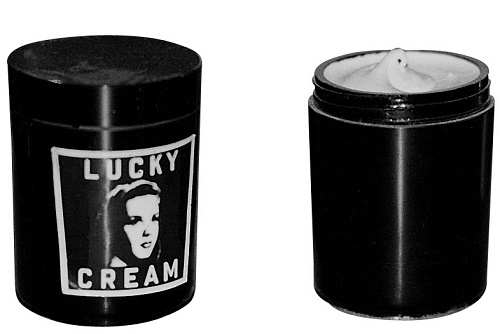
■ Dongdong Gurimu “Lucky Cream,” the start of domestic cosmetics
"Gurimu," a Japanese word for cream, and "dongdong," which means selling cosmetics by playing drums, combined to create a nickname “Dongdong gurimu” to Lucky Cream. At the time when imported goods were sweeping the market, it was the first domestic cosmetics challenging the market. It was written as Lucky in English, but it was written as Lak Hui(樂喜) in Korean, meaning a cream that gives joy and happiness to everyone.
At that time, Lak Hui Chemical was able to supply cosmetics that were as high quality as imported products by importing materials directly from Japan. In addition, the company had attracted women's hearts by using Diana Durbin as its model on cosmetics containers and worked hard to build a luxurious and modern brand image.
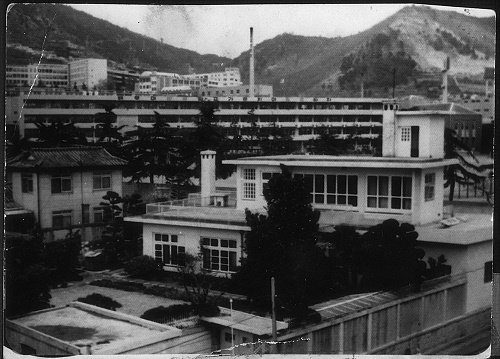
■ Born of “The History of Whoo” that reinterpreted Queen’s royal court culture
“Whoo,” which was born after a long study by the Oriental Medicine research center at LG Household & Health, is a cosmetic product that applies the royal family's unique court recipe. It is a brand that began with the idea of "How did the queens maintain their healthy and beautiful skin and beauty?" under the motif of the queen, a symbol and standard of beauty.
Based on tens of thousands of royal court medicine books, including the veritable records of the Joseon Dynasty and the Dongui Bogam, the ancient royal court recipes were analyzed and tested. It has succeeded in obtaining consumer satisfaction by efficiently mixing various medicinal products and adding “Sansam,” a precious medicinal herb that cannot be left out from “Whoo” series. It is currently on par with world-famous luxury brands.
■Fancy design marketing with royal court culture
The intention of the product to make our royal court culture feel elegant and unique, not just to use the product, is shown generously in the design.
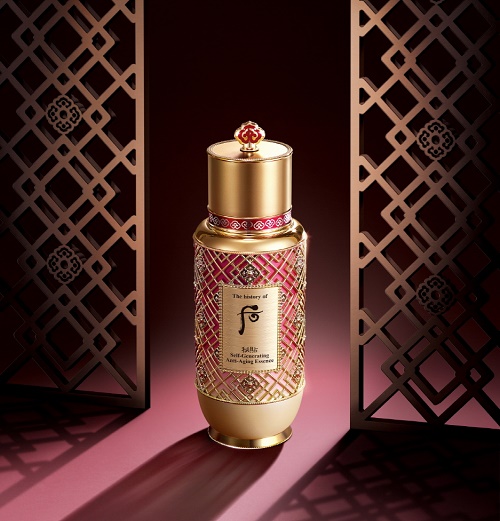
In particular, the special edition of "Bichup Self-Generating Anti-Aging Essence" is released under the motif of court art in Korea. It is well-recognized for its artistic values and forms a fandom.The design has been inspired by the graceful appearance of the queen under the moonlight. “Kkotsalmun” is a door with flower patterns engraved on the doorstep and is said to have excellent artistry that is comparable with the world's leading architecture.
In addition, “Whoo” made endless efforts to melt the beautiful Korean royal heritage, such as the queen's royal ceremonial dress "Juk-ui," “pear flower” representing the Joseon royal family, and “Geumbo” that shows the essence of craft and symbol of royal authority, into the design. In addition, by reinterpreting court cultural heritages in a modern way, the company received positive responses by bringing more values than a mere cosmetics to the global market as well as to the Korean market.
■ High-end strategy and VIP marketing
At the time of its entry, in 2006, China was already a venue for famous cosmetics brands from overseas. In order to differentiate itself, “Whoo” team began to promote the brand by using "Korean Wave," which they could not imitate, and "Royal Court Cosmetics" as its strategic keyword.
At that time, the company realized that Chinese women had a high preference for high-end products and put forward high-end strategies and VIP marketing strategies. It has established itself as a luxury brand by focusing on luxury department stores rather than on general stores, and is now selling it at more than 200 top-end department stores in major Chinese cities.
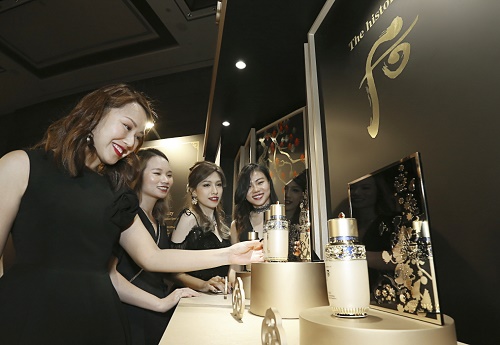
Moreover, VIP marketing that targets the top 5% of customers in China is also active. Major department stores in big cities hold VIP beauty classes as a part of the marketing. It then held the “2019 Royal Court Party in Shanghai” to promote brand value, which was highly acclaimed for further enhancing the value of the long-standing royal art brand. Now, “Whoo” is continued to grow among Chinese women as a high-end cosmetic containing the secret of the Queen.


